A bathroom shelf can hold a lot, and still look calm. The difference usually is not a bigger shelf or a matching set. It is a small set of choices: what stays out, what goes behind a door, and how the things left on view relate to each other. When bathroom shelf decor works, the room feels easier to use in the morning and easier to tidy at night, because every object has a reason to be there.
This guide stays with shelves and counters only. It looks at floating shelves, the small groupings that work on a counter, spa trays, and amber-glass dispensers, and it ends with a simple way to keep the counter clear after you have styled it. You do not need to buy a whole new look. Often, taking three things away does more than adding one more pretty object.
Table of Contents
Start With the Shelf, Not the Shopping List
Before you move anything decorative, take everything off one shelf or one stretch of counter and look at what is actually there. Most bathrooms collect duplicates: a spare bottle behind the bottle in use, a candle that never gets lit, a small dish that once held rings and now holds hair ties. Put daily items in one group, weekly items in another, and anything you have not reached for in a month in a third. The first group earns a visible spot. The second can live in a basket or cabinet. The third usually belongs somewhere else in the house, or in the recycling. A calm approach to bathroom shelf decor starts with this edit, before any new purchase.
This is also the moment to notice the shelf itself. A thick wooden shelf warms up white tile, while a thin glass shelf almost disappears and lets the objects do the work. Neither is better in every bathroom. Wood needs a wipe-down routine in a steamy room, and glass shows dust and water spots sooner. Choose the shelf that fits how often you are willing to clean it, not just the one that photographs best. For more room ideas in this style, see the Bathroom section.

Floating Shelves That Make Bathroom Shelf Decor Work
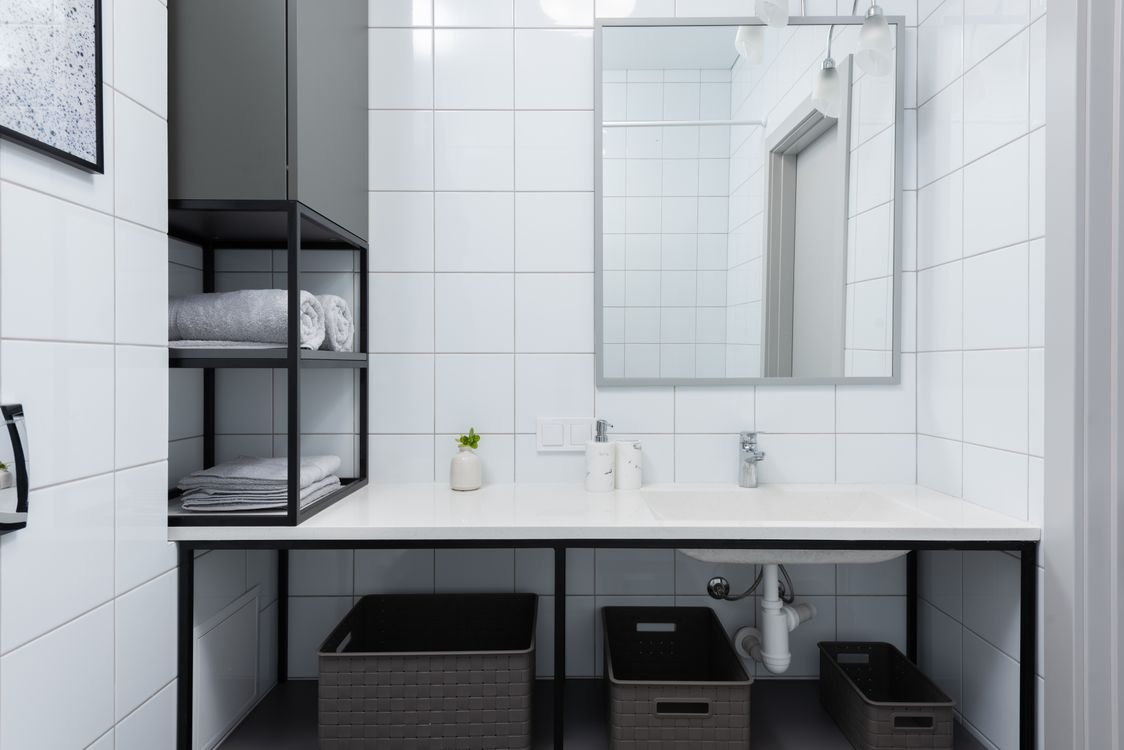
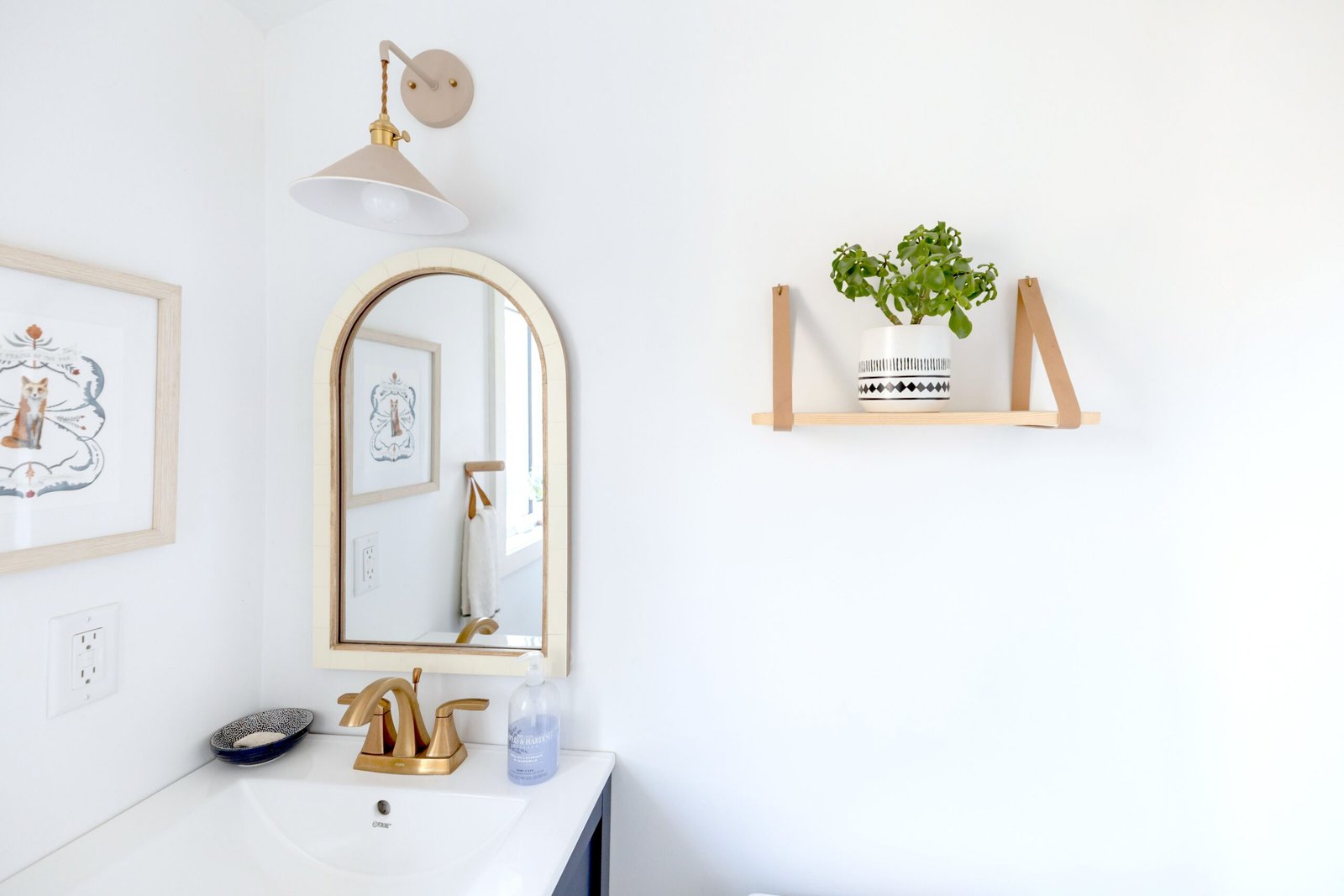
Floating shelves work best when they are not asked to store everything. One shelf above the toilet, or two staggered shelves beside a mirror, can hold the things you reach for every day, while the rest stays behind a door. Hang the lowest shelf where you can see and grab items without stretching, and leave at least a hand-width of empty space at each end. That breathing room is what keeps a full shelf from reading as clutter, and it is central to bathroom shelf decor that stays practical.
On a floating shelf, height matters more than symmetry. A tall bottle next to a low stack of washcloths looks settled, while four bottles in a row look like a shop display. If the shelf sits near water, favour closed or lidded containers for anything that will be splashed, and keep paper-wrapped items further back. A shelf that looks good on day one but collects damp cotton pads by day ten was styled for a photograph, not for a bathroom.
Counter Vignettes of Three to Five Objects
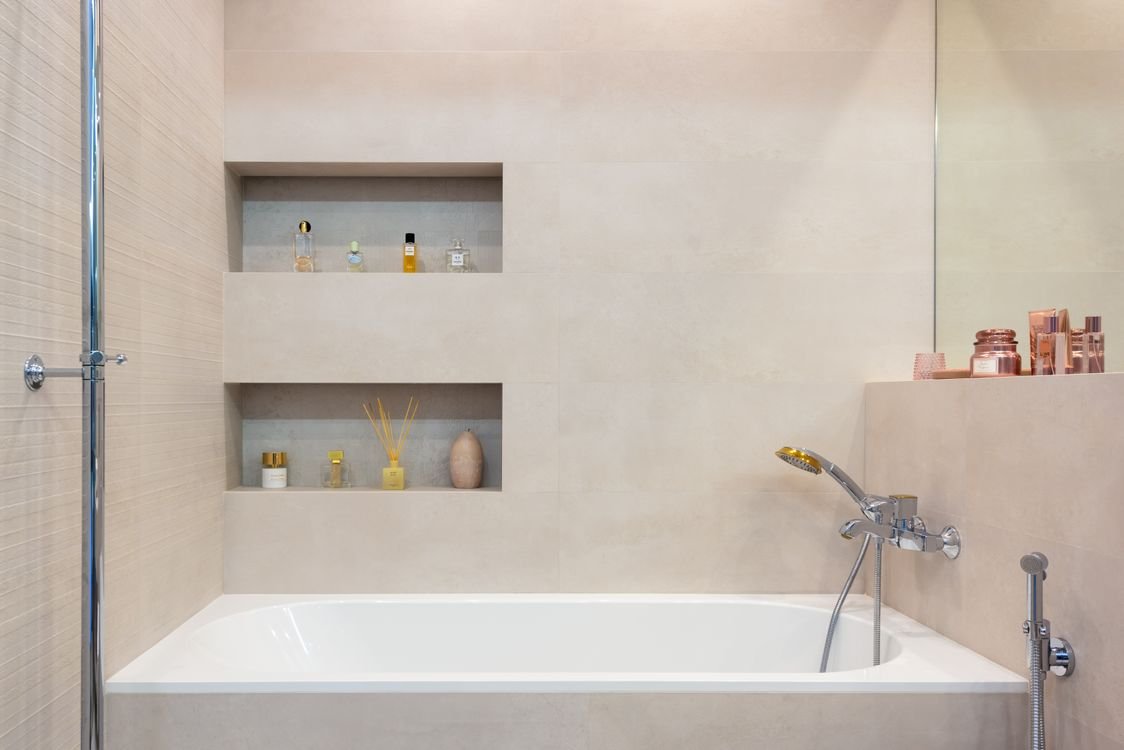
A counter vignette is simply a small grouping that is meant to be seen together. Three to five objects is a useful range: fewer can feel sparse beside a large mirror, and more tend to turn into a crowd. Start with one taller piece, such as a small vase with a stem or a tall dispenser, then add a medium piece, like a folded hand towel or a small plant, and finish with something low, such as a soap dish or a short candle. Step back. If your eye lands on one thing first and then moves around the group, the grouping is working. If it snags on a single bright label, that object is probably fighting the rest.
This is bathroom shelf decor at counter height: the same idea of editing, applied where you wash your hands.
Keep the vignette on one side of the sink if you share the bathroom, so the other side stays clear for washing hands and setting down a toothbrush. The trade-off is real: a vignette in the middle looks balanced in a photograph, but in daily use it gets moved, knocked, or pushed aside every morning. A grouping tucked to the side, near the wall or the far corner, survives the routine and still softens the room.
Spa Trays That Gather Without Hiding
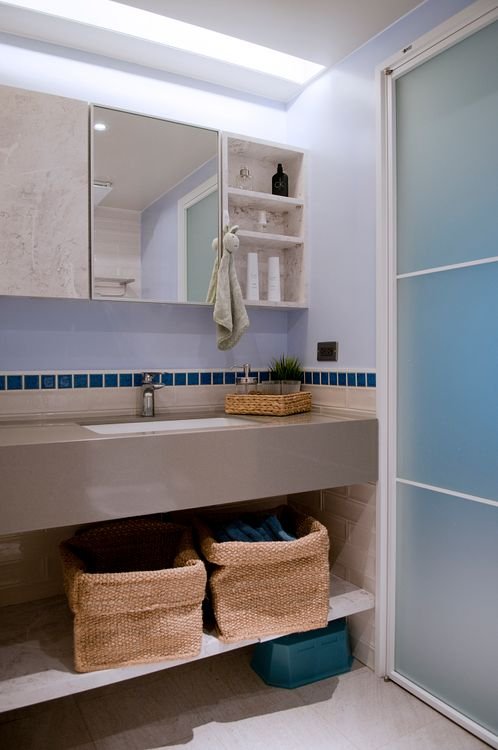
A tray does two quiet jobs. It gives scattered bottles a boundary, and it gives you one thing to lift when you wipe the counter. That only works if the tray is sized to the counter and to the objects on it. A tray that covers half the counter makes the room harder to use, and a tray so small that bottles perch on its edge looks worse than no tray at all. Measure the clear space beside the sink, then choose a tray that leaves room for hands, a glass, and the daily wash. In bathroom shelf decor, a tray works like a shelf edge: it defines where the display ends.
Wood, bamboo, stone, and metal trays all handle a bathroom differently. Wood and bamboo feel warm but need drying after splashes, stone stays steady and is easy to wipe, and metal can spot in hard water. Whatever you choose, keep the tray to a few items: a dispenser, a small plant or candle, and one rolled washcloth. Once the tray becomes a second shelf, it has stopped helping.

Amber-Glass Dispensers and the Case for Fewer Bottles
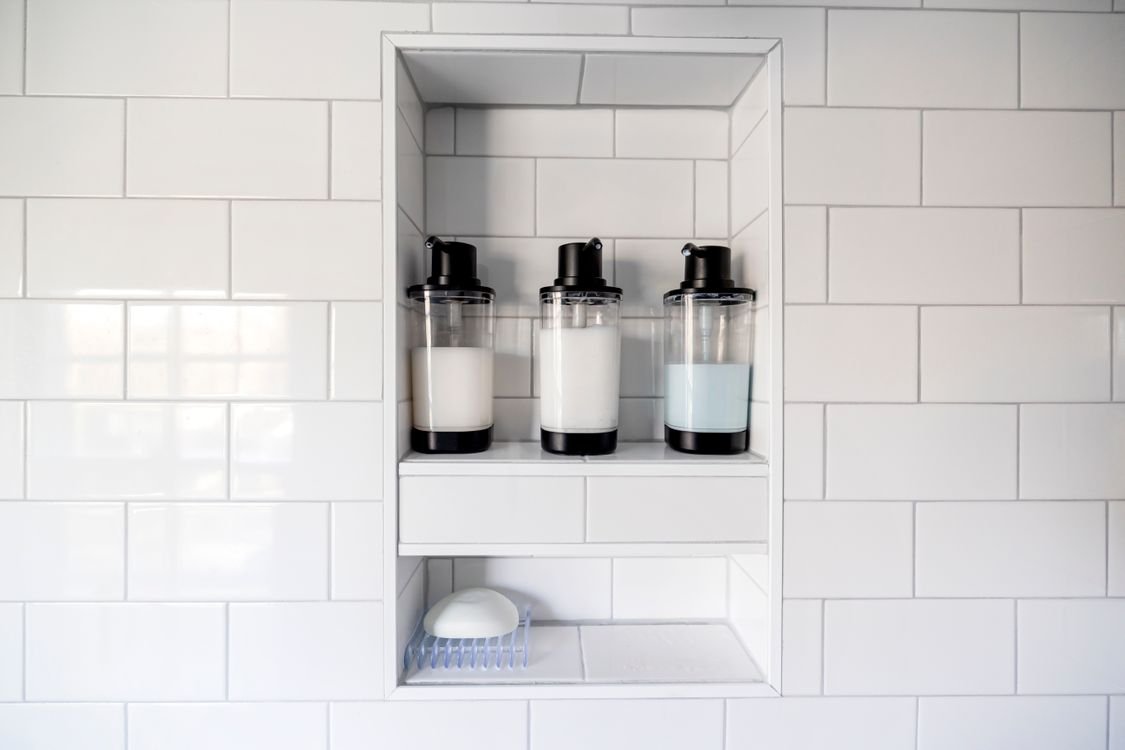
Amber-glass dispensers are popular for a practical reason, not just a visual one: they turn a row of mismatched bottles into one calm shape and colour. Decant hand soap and lotion into matching dispensers, label them only if the household needs it, and keep the refill bottles out of sight. The counter suddenly looks quieter, even though the same products are in use. The cost is a small routine: refilling, rinsing a pump now and then, and checking that a pump still works before it runs dry mid-week. For bathroom shelf decor, two matching dispensers often do more than a crowded shelf of original bottles.
Not everything should be decanted. A product you use once a week, a medicated wash, or anything with detailed instructions is easier to keep in its original bottle, stored away. Dispensers earn their place for the two or three products you use every single day. Beyond that, you are adding maintenance without improving how the bathroom looks or works. Two matching dispensers beside a soap dish usually do more than a full set of six.
Keeping the Counter Clear After You Style It
Styling is the easy part. Keeping a counter clear is a habit, and it helps to make that habit small. Choose one home for each daily item: the dispenser on the tray, the toothbrush in its cup, the hand towel on its ring. At the end of the day, returning those few things takes less than a minute, and it prevents the slow build-up that makes a styled counter look tired again. When something new comes into the bathroom, ask what it replaces. If the answer is nothing, it probably belongs in a cabinet for a week first, to see whether you actually reach for it.
Finally, give the shelf and counter a quick reset once a week, not a deep clean every month. Wipe the shelf, check for empty bottles, straighten the tray, and remove anything that drifted back. Bathroom shelf decor holds up best when it is treated as part of the room’s routine, not as a finished display. A shelf with a little empty space, a counter with one calm grouping, and dispensers you actually use will look better, for longer, than a crowded arrangement that needs constant rescuing.
Photos in this guide are royalty-free images from Pexels.