Good pantry organization ideas start with a simple question: what do you reach for on an ordinary Tuesday night? If the answer is buried behind bags that fell over, boxes you forgot you owned, and a spice collection you cannot see, the pantry is not failing because you are disorganized. It is failing because the layout does not match how you actually cook, shop, and put things away.
This guide takes a calmer route. Instead of buying a matching set first and hoping it fixes the mess, you will sort what you have, give each kind of food a sensible home, and choose containers only where they solve a real problem. The result is a pantry that stays usable after the first week, not just on the day you tidy it.
Table of Contents
Start With What You Actually Use
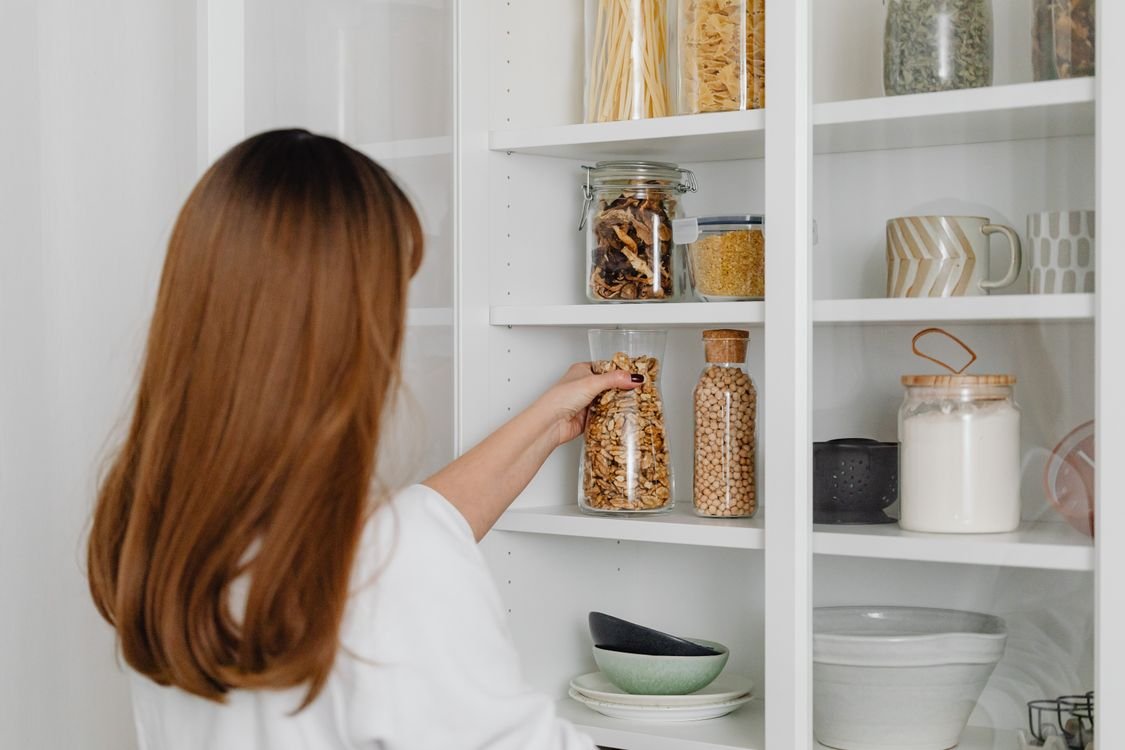
Take everything off one shelf at a time, rather than emptying a large pantry in one go. Check dates as you go, and make three clear groups: food you use every week, food you use now and then, and food that is stale, damaged, or that no one in the house will eat. Keeping a half-used sauce because it might be useful one day is how shelves fill up again, so be honest about what your household actually finishes. This is where pantry organization ideas start: with what you keep, not what you buy.
Once you can see what is left, patterns usually show up quickly. Weeknight staples such as pasta, rice, tinned tomatoes, and cooking oil tend to earn the easiest spot, while baking ingredients, snacks, and drinks can sit a little further back. If two people cook in the house, it helps to agree on those spots together, because a system only one person understands will drift back to random piles within a month. Those patterns are the heart of pantry organization ideas that actually last.
The trade-off here is time against momentum. A full clear-out feels satisfying, but it can leave a kitchen in chaos for a whole afternoon. Working shelf by shelf is slower to look at, yet it lets you cook dinner in between, and it stops you from buying storage before you know how much space you really need.
Group Food Into Zones That Match How You Cook
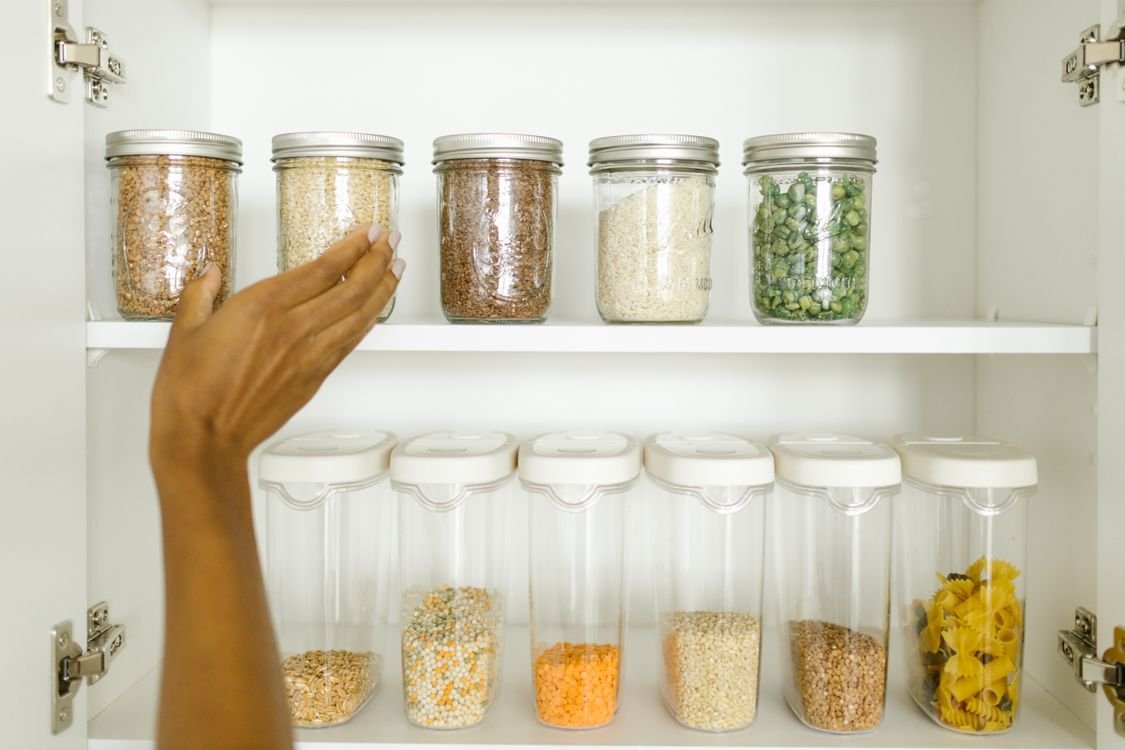
Zones work better than sorting by brand, colour, or container size. Try a breakfast zone for oats, cereal, and spreads, a weeknight cooking zone for grains, pasta, sauces, and stock, and a baking zone for flour, sugar, and dried fruit. Snacks, drinks, and backstock can each have their own zone too, even if that zone is only one small basket on a shelf. These pantry organization ideas work best when each zone has a clear job.
Place each zone where it makes sense for the way you move around the kitchen. Everyday cooking ingredients do best at eye level and near the front, while backstock and rarely used items can go higher up or deeper into a shelf. Heavy tins and jars belong low, where they are safer to lift and less likely to fall on someone reaching for something else. That placement is a quiet part of pantry organization ideas that saves time every day.
Labels help most when more than one person puts food away, or when a zone holds similar-looking jars. A short label on the front, such as oats or plain flour, is enough. Over-labelling every single item, on the other hand, adds a chore that is easy to skip when you are unpacking shopping in a hurry.
Choose Containers That Earn Their Shelf Space
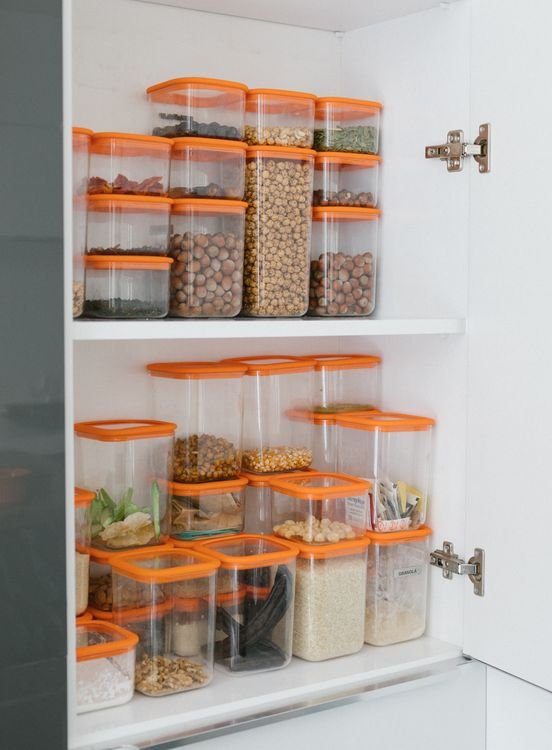
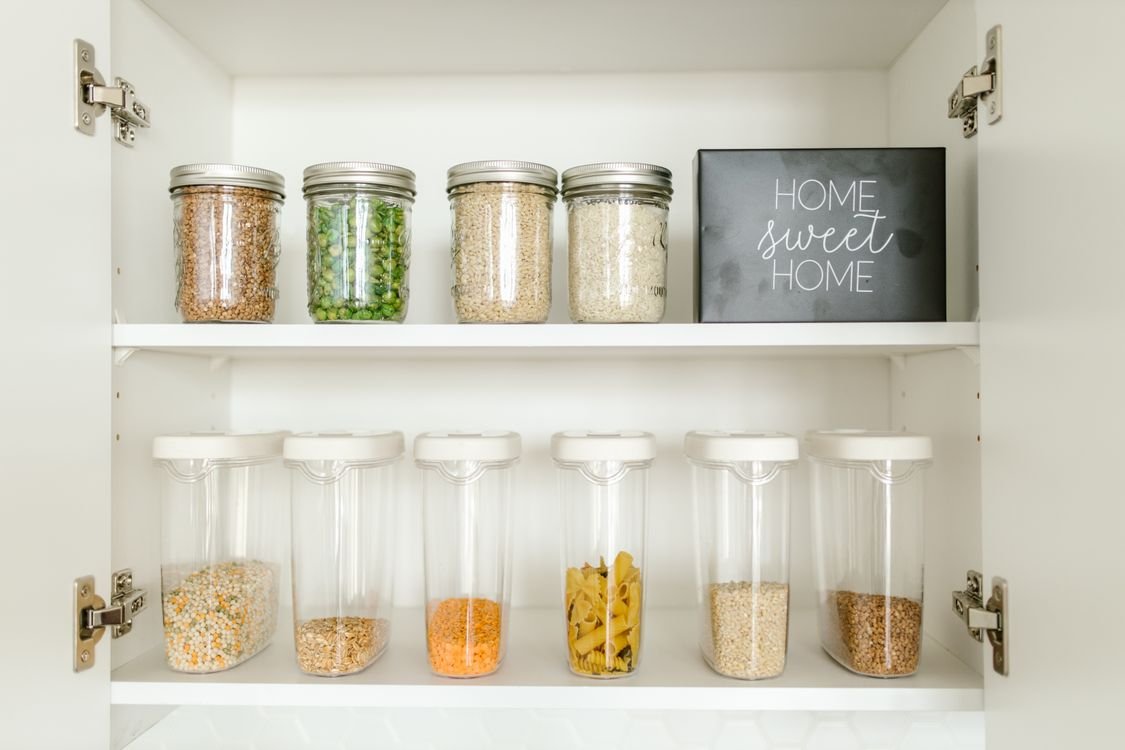
A container earns its place when it stops a specific problem. Clear jars make sense for flour, rice, and lentils because you can see how much is left and spot weevils or damp before they spread. Sealed tubs help for cereal, crackers, and anything that goes soft once the bag is open. If a container does none of those jobs, it is mostly decoration, and decoration takes up shelf space. That test keeps pantry organization ideas practical instead of purely decorative.
When you do buy containers, choose one footprint and stick to it as far as you can. Containers with the same base size stack neatly, leave fewer gaps, and are much easier to slide in and out. Wide mouths matter too, especially for scooping flour or pouring oats, and a lid you can open with one hand is a small detail you will notice every single day. Sticking to one footprint is one of the simplest pantry organization ideas to maintain.
There are real trade-offs between materials. Glass is heavy, but it does not hold smells and it shows contents clearly. Light plastic is easier to lift from a high shelf, yet it can stain and scratch over time. Whatever you choose, only decant foods you use quickly. Keep the original packet, or a photo of it, for anything where you might need allergy details, cooking times, or a recipe on the back.
Make Small Pantries and Awkward Corners Work Harder
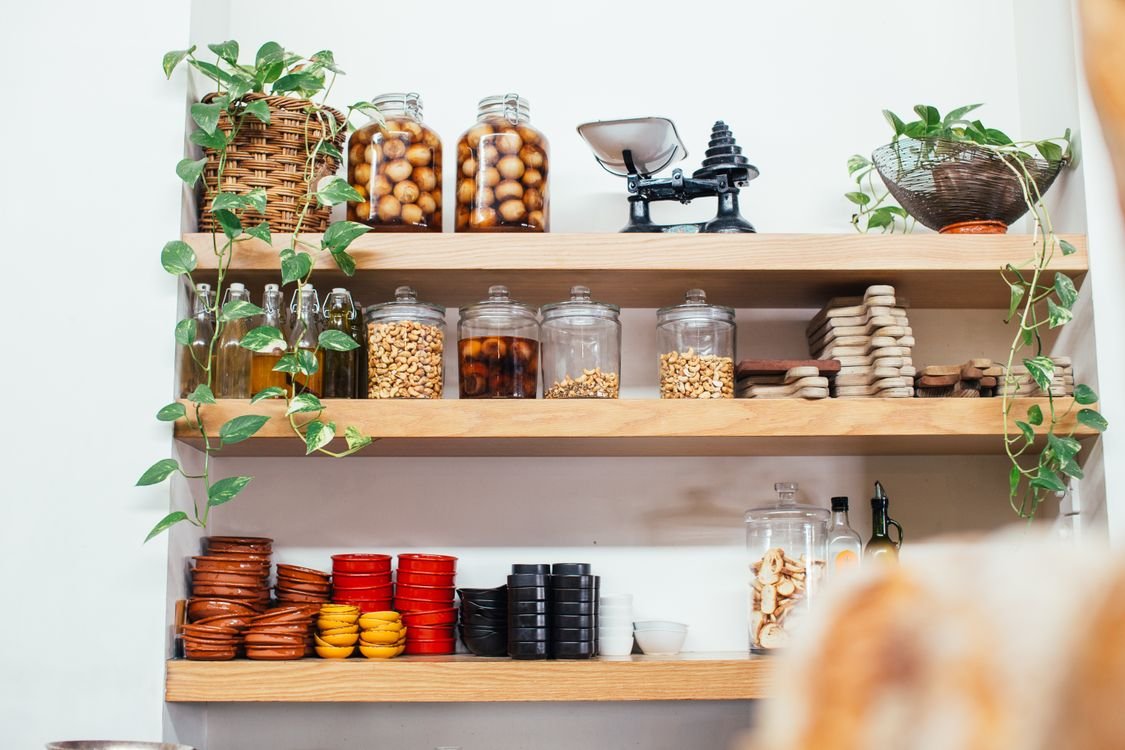
Small pantries benefit most from using the parts people forget. A turntable on a deep shelf stops jars from hiding behind each other, a small shelf riser gives a second level for tins, and a narrow bin can hold packets upright so they do not slide into a heap. The inside of a pantry door, if it is sturdy, is a good home for spices, small sauces, or a shopping list, as long as the door still closes easily. Small-space pantry organization ideas often come down to using forgotten surfaces well.
Awkward corners need a different rule: put the least-used items at the back, and keep a pull-out bin or turntable at the front for daily foods. That way you are not moving five jars to reach one tin of beans. If a corner is so deep that you cannot see into it without a torch, it is better suited to backstock, spare cleaning supplies, or a single large container than to everyday cooking.
Not everything has to live in the pantry. A small overflow box in a nearby cupboard, for spare pasta or tinned goods, can keep the main shelves calm, provided you check it before you shop. Trying to squeeze every spare item into a small pantry usually backfires, because an overfilled shelf is harder to use than a slightly fuller cupboard elsewhere.
Keep It Working With a Simple Weekly Reset
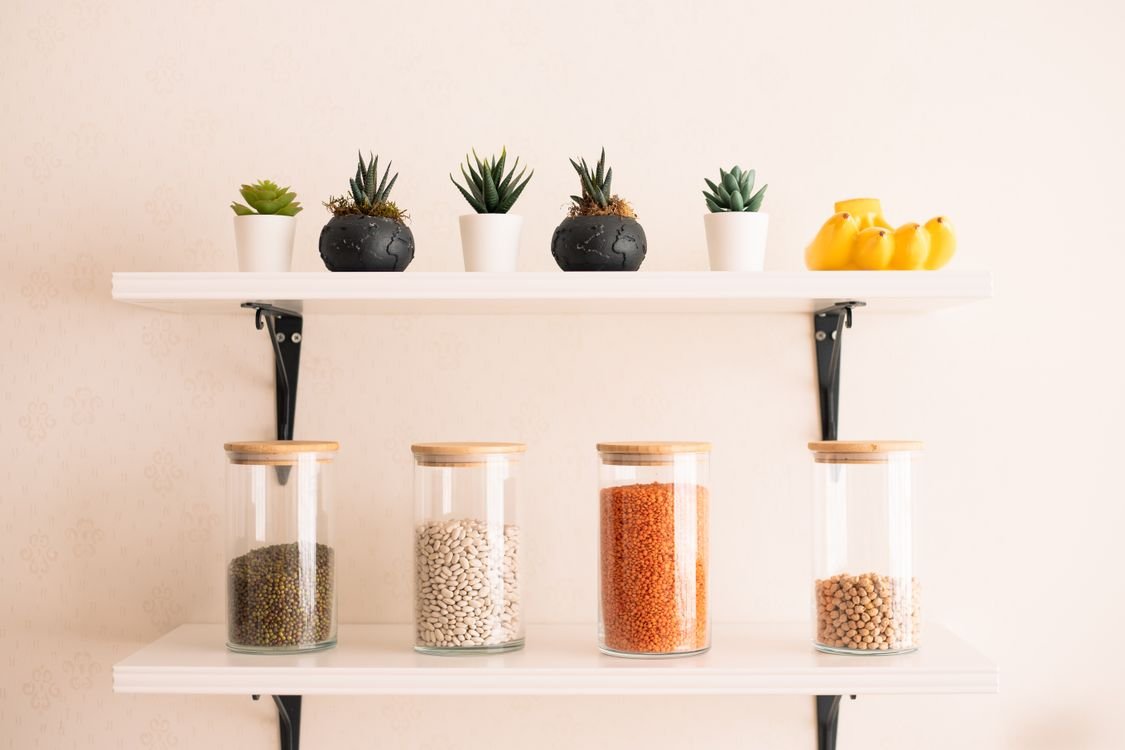
A pantry stays organized when the upkeep is small enough to do without thinking about it. Once a week, pull items on one shelf forward, return anything that drifted into the wrong zone, and check for a bag that has split or a jar that is nearly empty. Ten minutes is usually enough, and it is far easier than another full clear-out in six months. A short weekly reset is what makes pantry organization ideas last beyond the first tidy.
Shopping habits matter as much as storage. Check the pantry before you write a list, and note what is running low instead of guessing in the shop. For snacks and drinks, a simple one-in, one-out habit helps: when a new box comes in, the old one should already be finished or moved to the front, so duplicates do not quietly build up at the back.
If the system slips, do not start from scratch. Reset a single zone, such as weeknight cooking, and leave the rest until next week. That is usually enough to make cooking easier again, and it keeps pantry organization from turning into a project that only happens when the mess feels overwhelming.
Skip the Systems That Look Good and Fail Fast
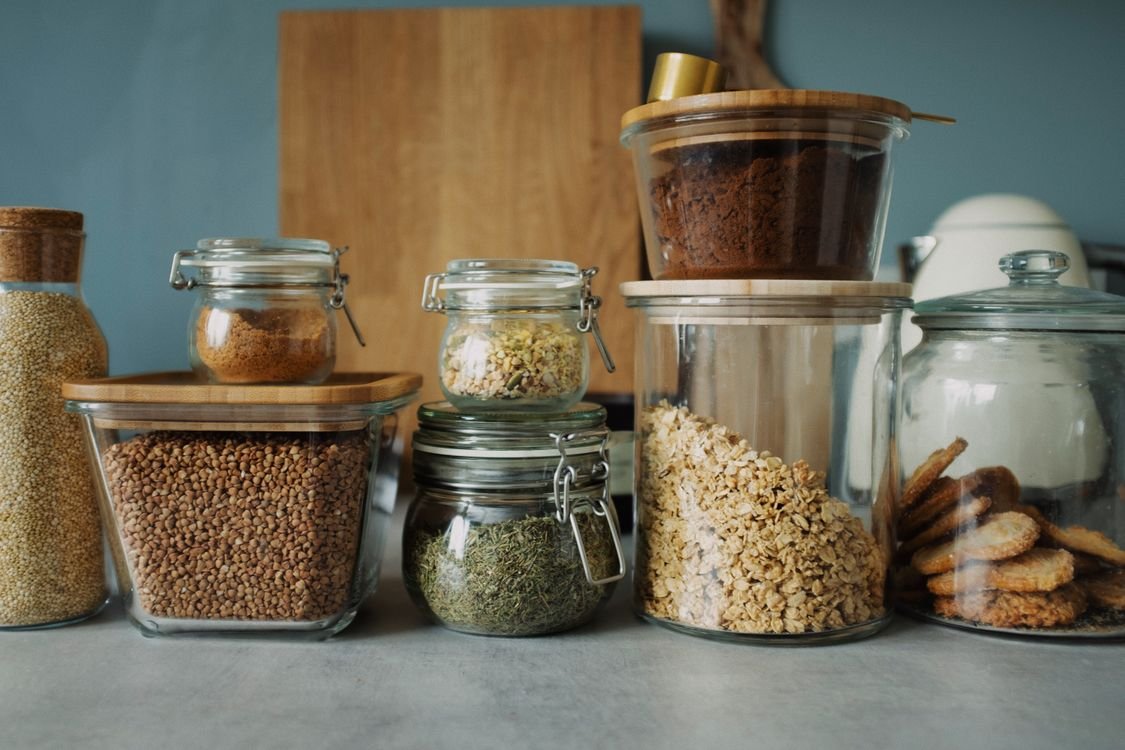
Matching containers can look lovely in a photograph, but they are not a system on their own. If every jar is the same size, small amounts rattle around in large jars, and large amounts do not fit at all. A mix of sizes, chosen for what you actually store, usually works better, even if it looks less uniform on the shelf. Not every pantry organization ideas trend survives daily use, and that is a useful filter.
Open baskets are another trap. They suit large, sturdy items such as potatoes or spare kitchen cloths, but small packets slide through gaps, fall over, and end up mixed together. The same goes for decanting everything: transferring slow-moving spices, baking decorations, and half-used packets into jars creates extra work, extra washing, and extra lids to lose.
A useful test for any pantry organization ideas you try is whether someone else could find the pasta and put it back without asking you. If the answer is no, the system is probably too detailed, too high, or too hidden. Simplify one thing at a time, such as moving daily foods lower or giving snacks a single basket, until the answer becomes yes.
Pantry organization ideas work best when they fit the kitchen you have, not the kitchen in a photograph. Sort what you use, group it by how you cook, add containers only where they help, and give the pantry a short weekly reset. The goal is not a perfect shelf. It is a shelf where dinner is easier to start, shopping is easier to plan, and putting food away takes seconds, not a search. Good pantry organization ideas should make the next meal easier, not the shelf harder to maintain.
For more ideas, browse the Organization collection, and the photographs in this post are from Pexels.