Learning how to declutter your home can feel harder than the decluttering itself, especially when every room seems to need attention at once. The trick is not to start everywhere. It is to start somewhere small enough that you can finish, see the difference, and actually want to keep going.
This beginner guide keeps the process realistic, especially for a small home where there is nowhere to hide the overflow. You will pick one area, sort it with a simple keep, donate, and relocate rule, and stop before you buy a single bin. That order matters, because organising clutter just moves the problem into prettier boxes. If you are wondering how to declutter without a whole weekend free, this approach starts with what you can finish today.
In This Guide
Start With One Small, Visible Spot

A single drawer, the top of an entryway table, or one bathroom shelf is a better starting point than a whole room. You can empty it, wipe it, decide on everything in it, and put back only what belongs there, all without turning the rest of the house upside down. That finished spot then does something a half-cleared room cannot: it shows you what clear actually looks like in your own home, and it stays clear because you know exactly what lives there.
The trade-off is patience. It can feel slow to ignore the spare room while you fuss over a drawer, and it can feel tempting to pull everything out at once so the change looks dramatic. Resist that urge at the start. A dramatic pile in the middle of the floor usually ends the day in a hurried heap back in the cupboard, while a small, completed area gives you a place to stand, a routine to repeat, and proof that the rest is doable in the same way, one spot at a time. That is why learning how to declutter in small steps often lasts longer than a single big clear-out.
Sort With a Simple Keep, Donate, and Relocate Rule
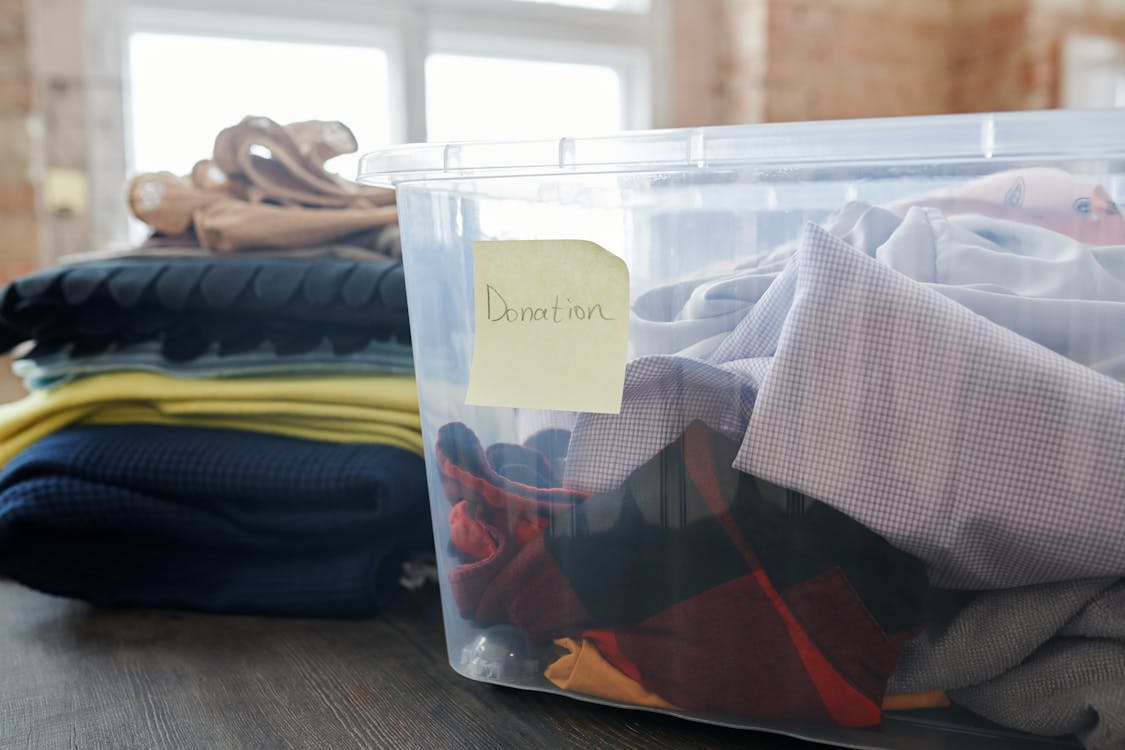
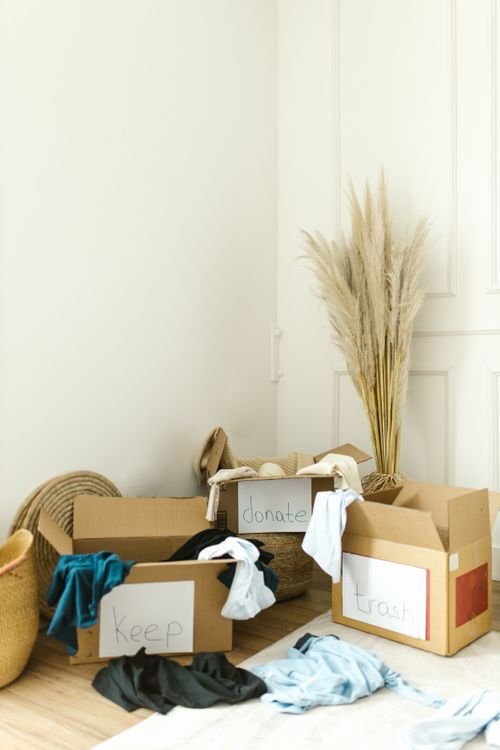
When you are learning how to declutter, decisions get easier if you use only three piles to begin with. Keep means you use it regularly, it fits the space, and it has a home once the area is tidy. Donate means it is still usable but you have not reached for it in a long time, or you have something else that does the same job better. Relocate means it is useful, but it belongs in another room, and it should go there the same day rather than becoming a new pile by the door.
A fourth pile for broken, stained, or genuinely worn-out items is worth having too, but do not let a maybe pile sneak in beside it. A maybe box feels kind in the moment, yet it usually just postpones the same decision and takes up the very space you are trying to free. If an item makes you pause for more than a minute, ask a plainer question: would you buy it again today, in this condition, for this home? If the answer is no, and it is still in good shape, it is a donation. If the answer is no and it is not, it can go.
Work in Short Sessions You Can Actually Finish

Set a timer for twenty or thirty minutes, choose one spot, and stop when the timer ends, even if you are in the middle of a drawer. That sounds counterintuitive, but it protects the rest of your day and stops decluttering from turning into a tired, all-afternoon project where everything is out and nothing is decided. Put donations straight into a bag, put relocated items where they belong, and leave the finished area tidy before you walk away. This is also a calm way to learn how to declutter, because the timer, not the size of the mess, decides when you stop.
Short sessions also make it easier to be honest. When you know you only have half an hour, you are less likely to keep a jacket because you might wear it on a holiday you have not planned, or a gadget because it might be useful one day. You can still keep sentimental pieces, of course, but give them a clear limit: one small box, or one shelf, rather than a whole cupboard that slowly fills again. Limits are not about being strict for its own sake. They are what keep a small home from filling up between one clear-out and the next.
How to Declutter Before You Organize Anything

Buying baskets and dividers first is one of the most common ways a good clear-out stalls. It feels productive, and the containers look tidy in the shop, but at home they often end up holding the same overflow, only now it is harder to see and harder to reach. Declutter first, live with the emptier shelves for a few days, and only then notice what actually needs a container. A drawer that keeps sliding open, a shelf where small bottles fall over, or a pile of cables that tangles every week: those are real storage problems, and they are much easier to solve once the extra items are gone.
When you do add storage, measure the space and count what is going back in before you shop, and keep the system simple enough that putting something away takes seconds, not a small routine. A lid that needs two hands, a box stacked behind another box, or a label system nobody else in the house understands will all quietly push things back onto the counter. The best container is often the one you already own, reused for a smaller, clearer group of items, rather than a new set bought to match a photograph.
Make a Small Home Easier to Keep Clear

In a small home, clutter rarely comes from one big mess. It comes from places with no clear job: the chair that holds clean clothes, the kitchen counter that holds mail, keys, chargers, and dinner prep all at once, or the hallway where shoes, bags, and coats compete for the same square metre. Give each of those spots one job, and keep only what that job needs. Coats and bags by the door, mail in one tray that you empty each evening, and clean clothes straight into the wardrobe, even when folding them properly feels like too much that day. When you think about how to declutter a small home, start with those jobs, not with new storage.
It also helps to agree on a simple rule for what comes in. If a new mug, cushion, or kitchen gadget arrives, something similar goes out, or at least goes into the donation bag that day. Open shelving and glass-fronted cupboards look lovely, but they only stay calm when the items on them are few and genuinely used, so do not force that look in a home where closed storage would hide the everyday mess more honestly. A small home does not need to be minimal to feel clear. It needs fewer things competing for the same few surfaces.
Keep It Going Without Starting Over

Once the first areas are clear, the goal changes from clearing to noticing. A ten-minute reset at the end of the week is usually enough: walk through the rooms you use most, return relocated items, take the donation bag to the door, and wipe the surfaces you cleared. Doing it weekly means you catch a pile while it is still a pile, not after it has become a cupboard again. If a week slips, that is not a failure, and it is not a reason to start the whole house again. Just pick the smallest spot that has slipped and repeat the same short session.
If you only do one thing today, choose the spot you see first when you come home, and finish it completely. Put the donation bag by the door, and then stop. Tomorrow, or next weekend, you can choose the next small spot with the same simple rule. That is how to declutter a home without turning your life upside down: not by doing everything at once, but by making one area clear, keeping it clear, and letting the habit reach the rest of the house. Once you have seen how to declutter one spot well, the next spot feels less like a project and more like a habit.
Once the kitchen starts to feel clearer, the same small-space thinking in these small kitchen organization ideas can help, and the photographs in this guide are royalty-free images from Pexels. And once the bedroom is clear, these small bedroom ideas on a budget can help in the same way.