Small bedroom storage ideas matter most on the mornings when you cannot find a clean shirt, the laundry chair has taken over, and the room feels smaller than it did yesterday. Tiny rooms do not need bigger furniture. They need fewer hiding places for clutter, and a home for the things you actually use every day.
The nine tricks below are not a full renovation. Most of them take an afternoon, a measuring tape, and a bit of honesty about what you own. Start with the one that fixes your biggest daily annoyance, not the prettiest one on the list.
Table of Contents
1. Start Under the Bed
The space under a bed is the biggest storage area most tiny bedrooms already own, and it is usually wasted on dust and one lost sock. Measure the clearance first, then buy low bins that actually roll. Put out-of-season clothes and spare bedding in them, and label the ends so you are not dragging out four boxes to find a winter jumper.
The catch is friction. Bins on thick carpet stick, and lids that do not sit flat will catch on the bed frame. If a bin is hard to pull out, you will stop using it, so test one before you buy a full set.
2. Go Up With a Loft Bed
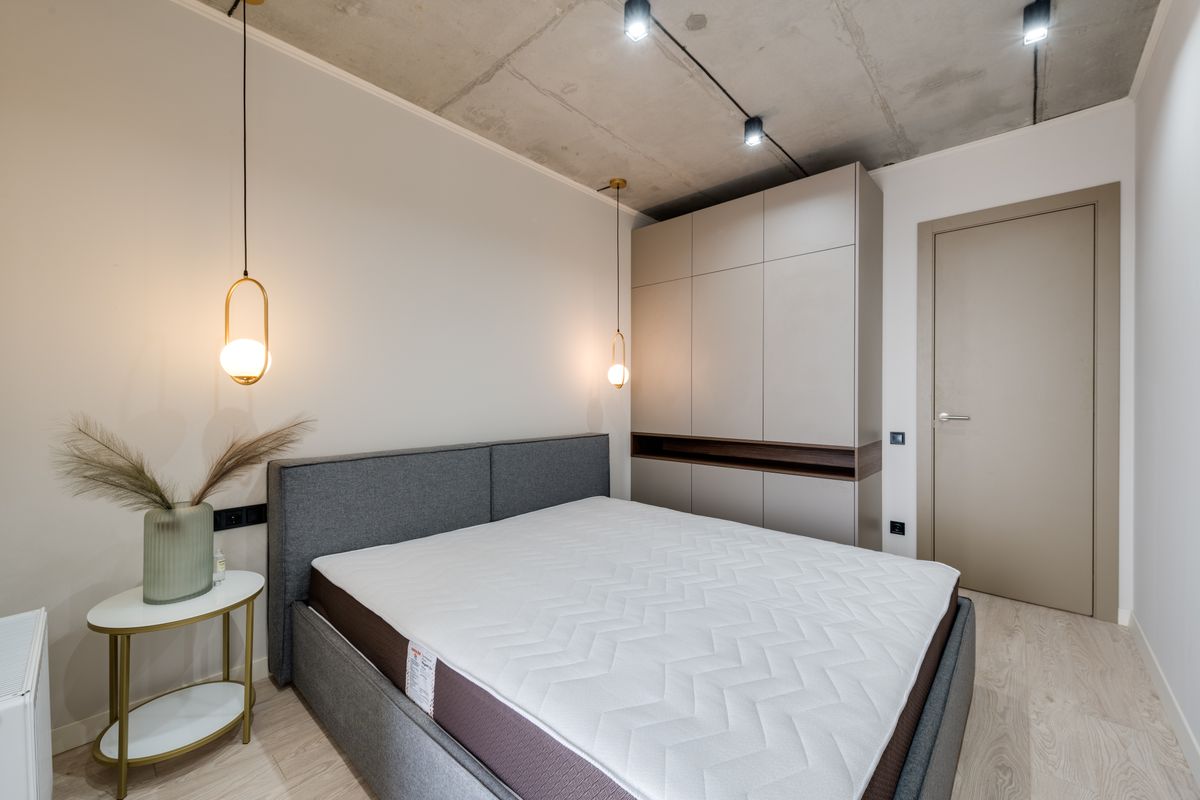
When floor space runs out, the only way left is up. A loft bed frees the whole footprint underneath for a desk, a dresser, or just room to walk without shuffling sideways. It works best in rooms with decent ceiling height, where sitting up in bed does not mean bumping your head.
Be honest about the trade-offs before you commit. Making a loft bed every morning is a small workout, and climbing a ladder at night is not for everyone. If you are not sure, borrow the idea for a week by imagining your daily routine up there, not just how it looks in photos.

3. Let the Wardrobe Do the Work
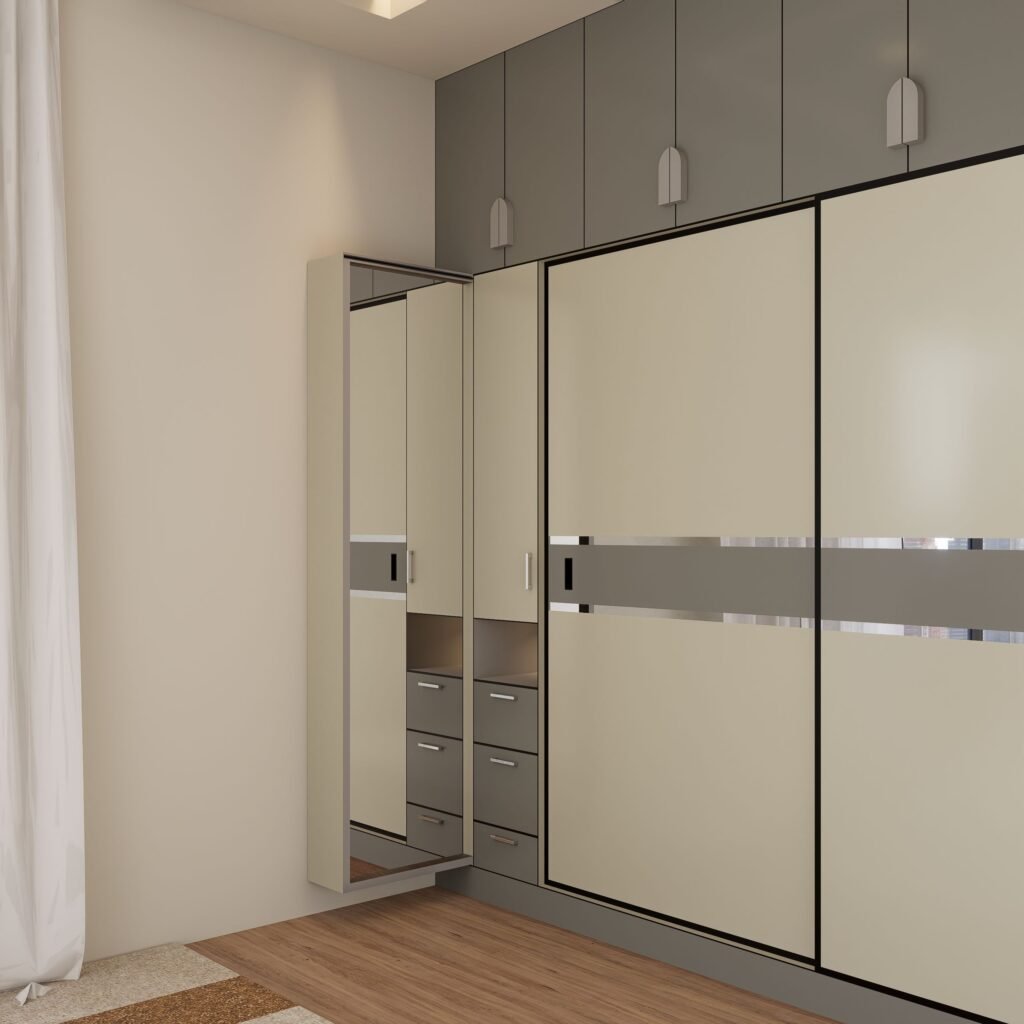
A wardrobe that only has one long rail wastes half its height. Add a second, shorter rail for shirts and a set of hanging shelves for folded things, and suddenly the same box holds twice as much. Keep daily clothes at eye level and move the rarely worn stuff up high, where it is out of the way but still findable.
The trap is stuffing it until the doors will not close. If you have to force a door shut, you have too much in there, not too little storage. Take out one thing you have not worn in a year before you add anything new.
4. A Nightstand That Holds More Than a Lamp
In a tiny room, a nightstand is not just a place for a lamp and a phone. Choose one with a drawer and a lower shelf, and it becomes the home for chargers, a book, hand cream, and all the small things that otherwise end up on the floor. A narrow one works fine; it does not need to be wide, just useful.
Watch the walkway, though. A deep nightstand beside a bed in a narrow room turns getting out of bed into an obstacle course. Measure the gap you need to pass comfortably, then shop to that number, not to the size that looks best in the shop.

5. A Closet You Can Actually See Into
A dark closet hides half of what you own, so you buy duplicates and forget what is at the back. A small battery light, matching hangers, and a simple rule – everyday clothes at the front, occasion clothes at the back – change how a closet feels. When you can see everything at a glance, getting dressed takes less time and less floor mess.

6. Built-In Shelves Around the Bed
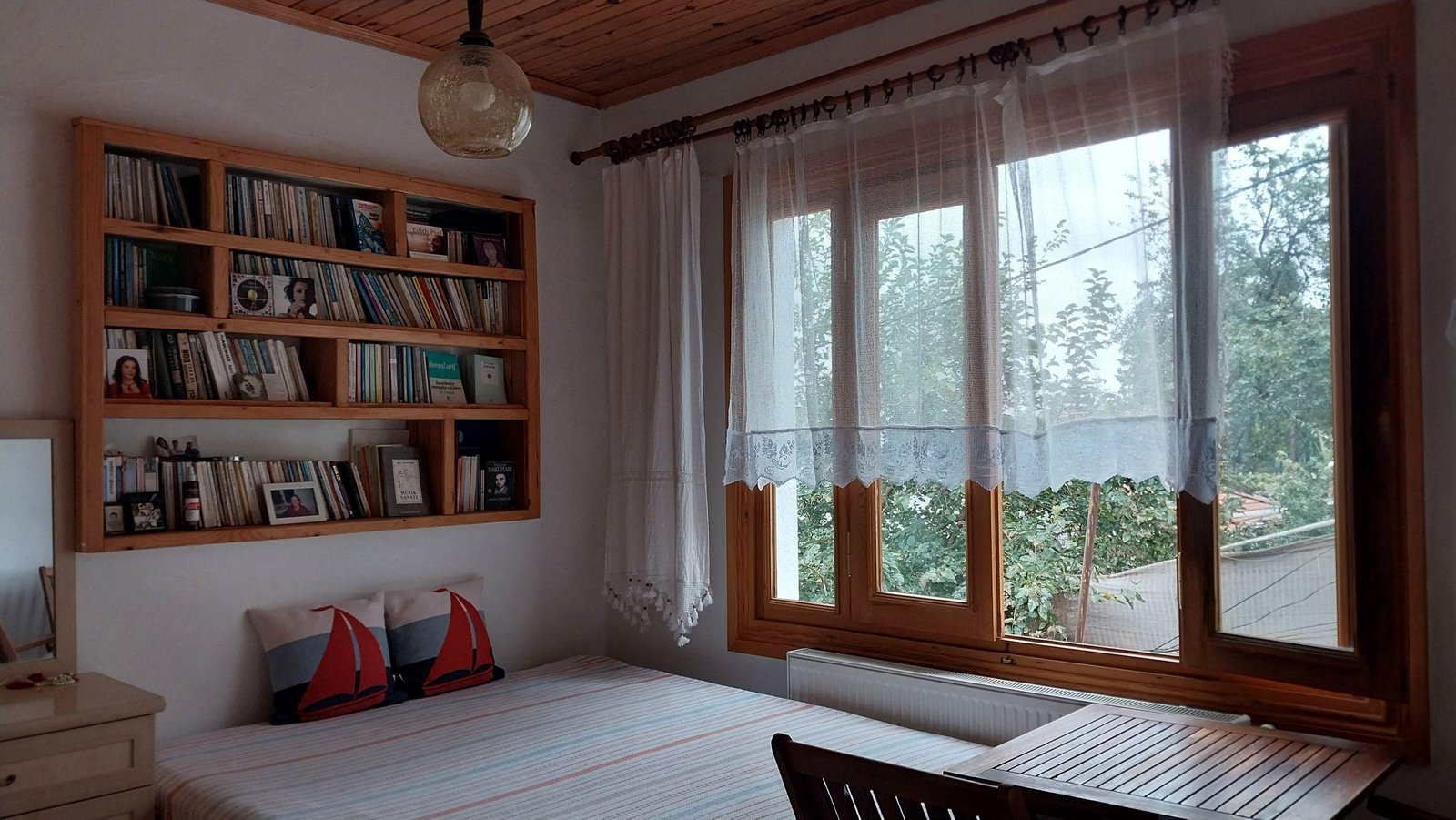
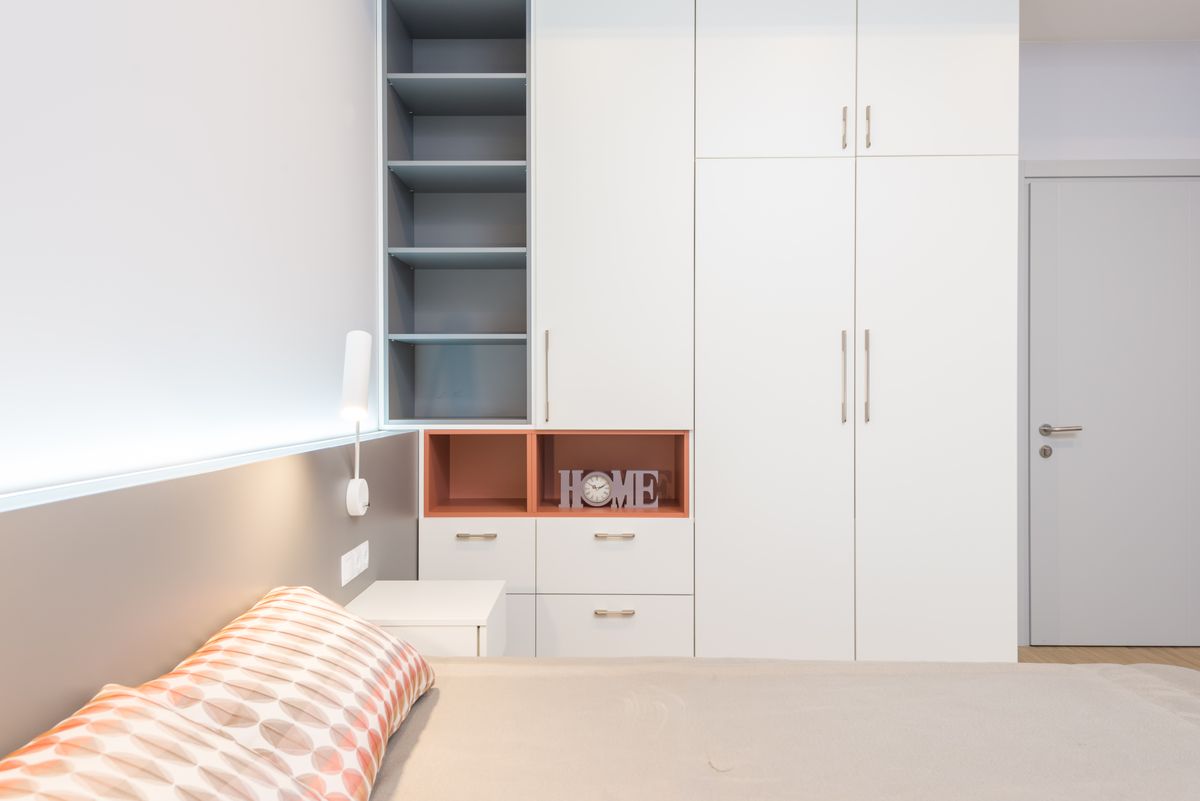
The wall behind and around a bed is often empty, yet it is prime storage real estate. Shallow built-in shelves or a simple shelf run above the headboard can hold books, a clock, and a few small things you reach for at night, without taking a single centimetre of floor space.
Keep the shelves shallow and the items light. Deep shelves over a bed invite heavy clutter overhead, and anything that could fall while you sleep should not live there. Books and small baskets, yes; heavy boxes, no.

7. Shelves Above, Not Beside
When floor and wardrobe space are full, look at the wall above head height. A single high shelf running along one wall can hold spare bedding, books, and boxes you do not need every day, all without crowding the room. It works because that space is usually completely empty.

8. A Bench You Can Sit On and Store In
A bench at the foot of the bed does two jobs at once: somewhere to sit while you put on shoes, and a box for blankets, bags, or off-season clothes. Choose one with a lift-up lid rather than drawers, so you are not fighting for clearance to pull a drawer out in a tight room.
The risk is that a bench becomes a dumping ground for everything without a home. Give it one job only, like blankets, and keep the top clear. The moment it is covered in clothes, it stops being useful seating and starts being another pile.
9. One Tall Wardrobe, Used Top to Bottom
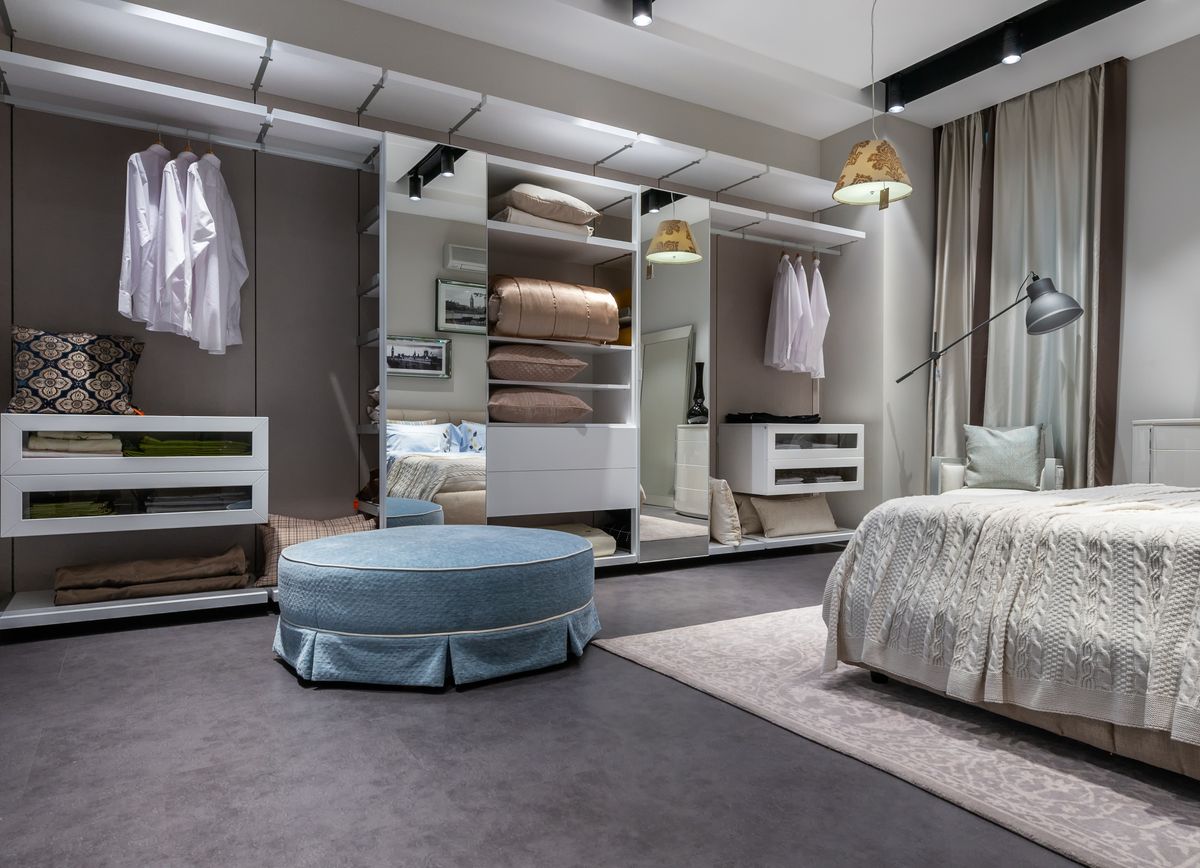
If you only have room for one big piece of storage, make it tall and use every level on purpose. Top shelf for seasonal boxes, middle for daily clothes, bottom for shoes and bags. Label the top boxes, because once they are up high, out of sight really does mean out of mind.
Start With the Floor You Can See
Pick one trick, try it for a week, and see if the room actually stays easier to live in. Small rooms reward small, steady changes more than one big clear-out. Photos in this post are from Pexels. Save this idea and pin the trick you want to try first in your own home. For more inspiration, browse the bedroom collection.
The same tricks carry over to closets, as these small closet organization ideas show, and for a whole-home version, this guide on how to organize a small apartment walks through it room by room.