Color drenching ideas sound like a dare: paint the walls, the trim, the doors — and sometimes the ceiling — all in one colour, with no white border to break it up and no safe accent wall hiding in the corner. It breaks every rule most of us were taught — which is why it works brilliantly, or goes badly wrong.
This guide is the practical version: what drenching is, how to pick a colour, what it does room by room, what to paint and leave, the mistakes, and how to test before you commit.
Table of Contents
What Color Drenching Actually Is
Color drenching means painting the walls, the skirting boards, the door frames and the doors in one colour, or in shades so close they read as one. The point is removing contrast: with no white trim breaking the room up, the room reads as one calm space. That is why color drenching ideas can make a room feel bigger than the same room painted white.
A teal room with a teal sofa, teal cushions and a teal rug is a showroom set, not drenching. Drenching is about the architecture while the furniture and art do the contrasting. And it is not an accent wall: one dark wall with white trim everywhere else never gives you the calm that real color drenching ideas deliver.

How to Pick a Colour That Suits Your Room
Start with the light, not the paint chart. A north-facing room or a room with one small window will swallow a dark colour by evening, however beautiful it looked in the shop. A south-facing room with big windows can carry charcoal or deep green.
Undertones are where most color drenching ideas quietly fail. Terracotta leans orange in sunlight and pink under warm bulbs, and you will notice the shift every single evening. Buy a sample pot, paint a patch three feet wide on two walls, and live with it for a few days.
Pick from something you already own — a rug, a piece of art, the sofa. Keep the shades close: walls at one depth, ceiling a shade lighter if the room is low, trim the same colour or a touch deeper. The moment they drift apart, the effect breaks.

Color Drenching in the Living Room
The living room is where color drenching ideas earn their keep. Built-ins in the same deep green as the walls start looking like part of the house. A charcoal wall makes a television almost disappear.

The catch is the anchor. One lighter piece is not optional in a dark drenched living room — a cream sofa, a pale rug, a light coffee table — because without it the dark merges into one moody mass. For the glamorous end of bold colour — gold, black, jewel tones — our Neo Deco living room ideas show how far that can go.
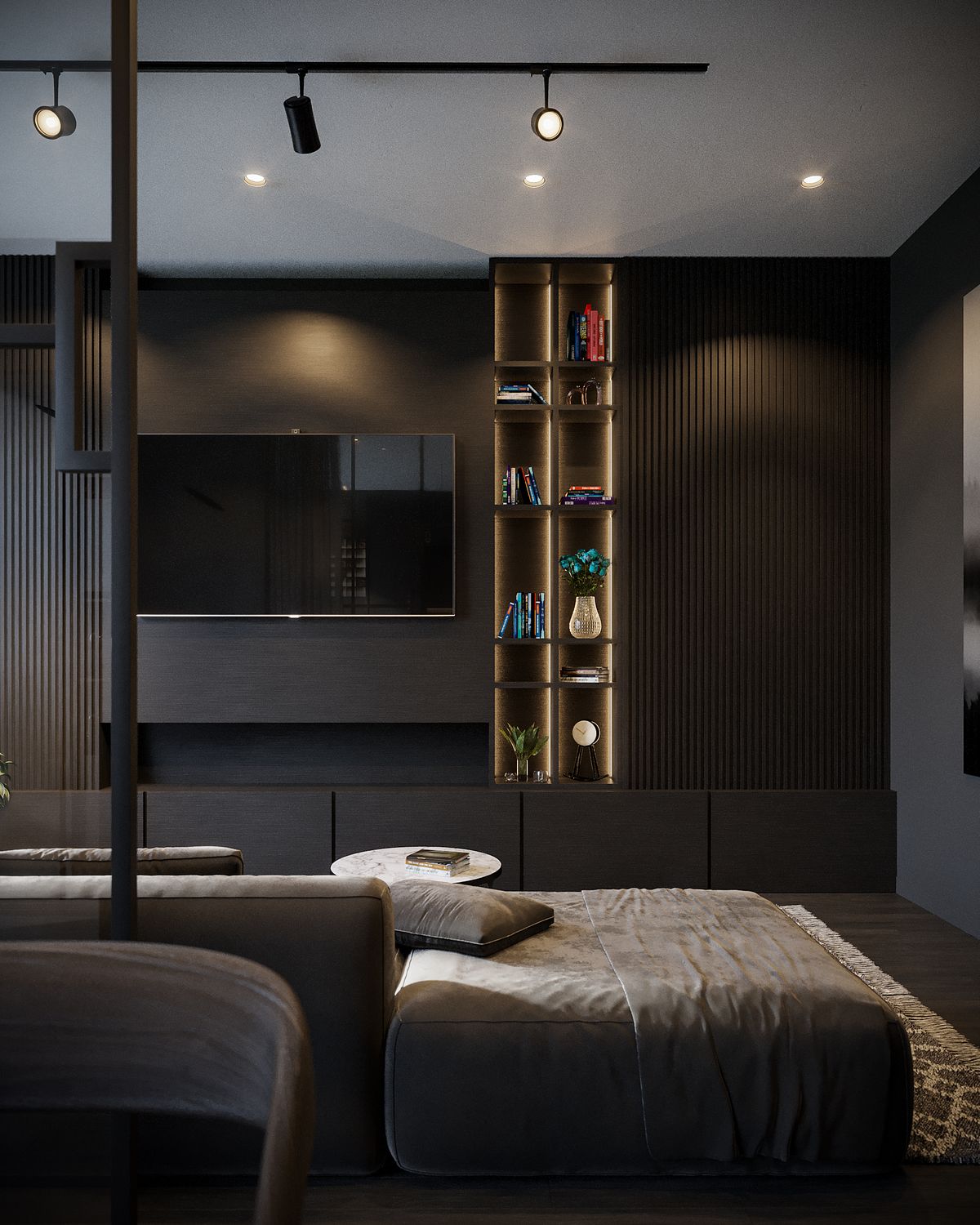
Plan the lamps before you paint, not after. A drenched living room with a single ceiling bulb is a cave with a light in it. Two or three warm lamps at different heights change the room more than any second coat — our living room lighting guide covers the placements that work, the lamp plan most color drenching ideas skip.
Color Drenching in the Bedroom
If one room suits color drenching ideas better than any other, it is the bedroom. One colour wrapped around the walls, wardrobe doors and trim makes it feel cocooned. Navy is the classic: walls, wardrobe doors and trim in the same navy, soft bedding, one warm bedside lamp.

Terracotta does the same job in a warmer register, for bedrooms that always feel cold. Keep the bedding pale — terracotta on terracotta turns a calm bedroom into a very warm cave.
The trade-off is the morning. A navy room can feel wonderful at night and heavy at seven in the morning, so keep the ceiling lighter or use pale curtains. And if you share the room, agree on it first — a dark drenched bedroom is much harder to paint over than a pale neutral.
Small Rooms, Hallways, and Awkward Corners
This is where color drenching ideas surprise people. A small room painted one colour can feel bigger than the same room painted white, because the edges blur. The catch is the light: a small living room with one window will carry a soft sage or a dusty pink beautifully, but the same room in charcoal will feel like a cupboard by evening. Our small living room ideas cover the layout side.

Hallways are the other place drenching quietly shines. One colour from skirting to ceiling stops a hallway feeling like a tunnel. Keep the ceiling lighter if the hall is low, and hang a mirror at the far end. The rule for color drenching ideas in small spaces is simple: drench light if the room is dim, and drench dark only if the room has the light — or the lamps — to carry it.

What to Paint — and What to Leave Alone
Paint the walls, the skirting, the door frames and the doors. Paint built-ins so they disappear. Paint radiators with paint made for them — a white radiator in a dark green room is a stripe you will never unsee. And decide the ceiling deliberately, because it is the decision that makes or breaks most color drenching ideas. The same colour overhead feels cocooned; a shade lighter keeps the height. A white ceiling is not drenching — it is a painted room with a lid on it.
Leave the floors alone; a painted floor is a different project. Leave switches and sockets unpainted — paint around them, not over them. And leave the art alone: a gallery wall hung over a drenched wall looks better than one hung over white, because the colour frames them for you — see our gallery wall ideas.
The Mistakes That Ruin a Drenched Room
First, a dark colour in a dim room with one ceiling bulb. Light is half the design — if the room cannot carry the colour in the evening, pick a lighter shade of the same family. Second, picking from a tiny swatch: a shade that looks rich on a two-inch chip can look muddy across a whole wall. Big patches, two walls, a few days — there is no shortcut, and it is the mistake behind most color drenching ideas that end in a repaint.
Third, going fully matchy: teal sofa, teal cushions, teal rug, teal curtains, and the room looks like a showroom set nobody lives in. Break it up with one strong contrast — warm leather or natural wood. Fourth, skipping the prep: dark paint shows every bump and scuff, plus dust and fingerprints on doors. Fill the holes and sand first.
How to Test Before You Commit
Test with sample pots, not with a full tin. Paint a patch at least three feet wide on two walls the light hits differently, and live with both for a week. Check them morning, evening and lamplight.
Paint the patch next to the skirting and the door, not in the middle of a blank wall, because you are testing the colour on the trim as well as on the wall. And keep the receipt: repainting a drenched room is twice the work of repainting one accent wall, and that test is what stops most color drenching ideas from ending in a repaint.
Frequently Asked Questions
Does color drenching make a small room look smaller?
Not if the colour suits the light. A small room painted one colour can feel bigger, because the edges blur. The risk is a dark colour in a dim room — that does close in. In a dim room, drench light and keep the ceiling lighter still.
Do I have to paint the ceiling too?
That is what makes it drenching. The ceiling in the same colour makes the room feel cocooned; a shade lighter keeps the height. A white ceiling is not wrong, exactly — but it is not color drenching, and it cuts the room in half in a way color drenching ideas are trying to avoid.
What colours work best for color drenching?
Deep green is the safest bold choice — it suits most light and most furniture. Navy works best in bedrooms, terracotta in rooms that feel cold, dusty pink where you want calm without a nursery feel, charcoal in living rooms with a light sofa, mustard in a sunny room with wood floors. Light and undertones matter more than the colour — test both.
Is color drenching hard to undo?
Yes, and darker colours more so than pale ones. A deep green or navy wall needs primer and at least two coats of the new colour to disappear. That is why the test patch matters: a week with a sample is cheaper than a weekend of repainting a whole drenched room.
A Room That Feels Like Itself, Only More So
Color drenching ideas work best when the room still feels like your room, just more so. Pick a colour your light can carry, test it on a big patch, paint the walls and trim, decide the ceiling on purpose, and let the furniture and art do the contrasting. Get those four right and the room feels calmer and bigger.
Photos in this article are from Pexels.