Afrohemian living room ideas start with warmth, not with a shopping list. Think clay tones, deep greens, woven texture, patterns gathered over time rather than bought in one afternoon. The style pulls from African textiles and art, then softens them with the loose feel of boho decorating. Done well, it reads as personal. Done in a hurry, it tips into clutter — so pick a few strong pieces and give them room to breathe.
This guide treats afrohemian living room ideas as a way of building a room, not a list of things to buy: what the style actually is, how to pick a palette that holds together, which patterns to let lead, how to layer texture without clutter, and where to spend and where to save.
Table of Contents
What Afrohemian Actually Is
Afrohemian is two words joined together, and the join matters. The African half is the material: mudcloth, woven baskets, carved wood, clay, hand-dyed cotton — things made by hand. The bohemian half is the attitude: low seating, layered textiles, plants, nothing too matched.
That is the test afrohemian living room ideas have to pass: does the room feel gathered, or decorated? A gathered room has pieces that do not match but get along — a basket from one place, a throw from another, a stool older than the sofa. Buy one thing at a time and live with it for a week before the next. These patterns come from living cultures, not a mood board — choose pieces you like and understand, not the loudest print on the shelf.
Start With the Palette, Not the Shopping
The palette is where afrohemian living room ideas begin: clay, terracotta, rust, ochre, deep olive, and a dark wood or charcoal to ground it. Pick two warm earth tones and one deep accent — forest green, indigo, or a dark plum — and let everything else stay quiet.
A warm base does not have to mean warm walls. If you rent, or the room is small, keep the biggest wall and the ceiling light and let the warmth come from a rug, a throw, and cushions. A white wall actually helps: warm pieces stand out instead of blending into a beige wash. If you own the place and the room gets good light, one deep wall behind the sofa gives the whole room depth — but dark paint drinks light, so test a big patch at night. Our color drenching ideas show the same deep green and terracotta.
Patterns: Let One Textile Lead
Mudcloth is the pattern afrohemian living room ideas are usually built around. Its hand-drawn lines and geometric marks are bold without being loud in colour, so one mudcloth throw or a pair of cushion covers can carry a seating area. Put the pattern where you sit, not everywhere you look.
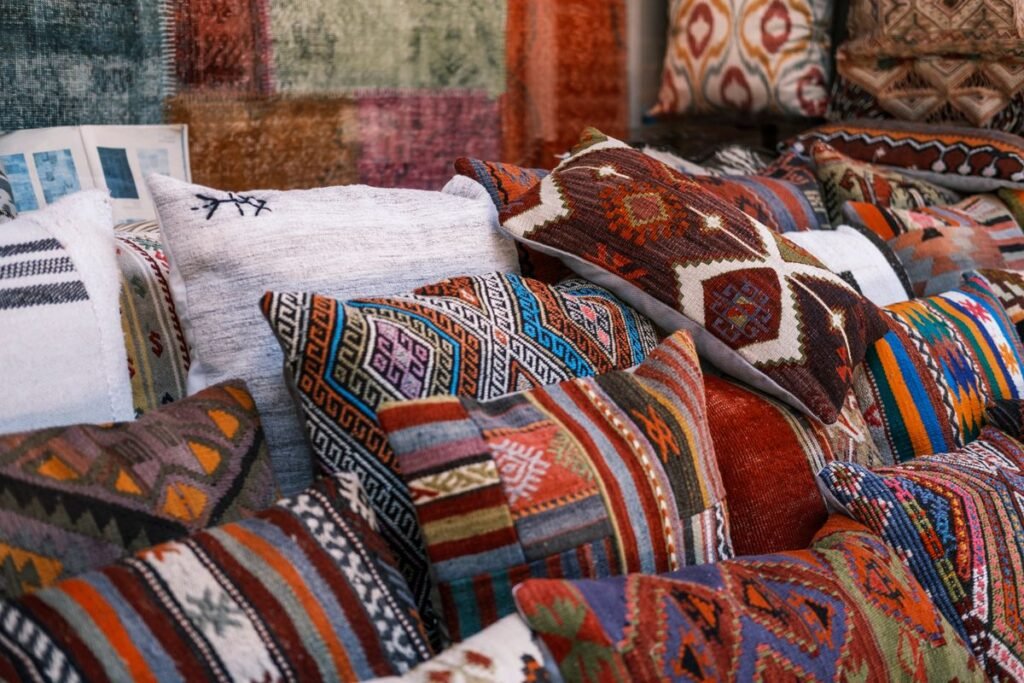
Kente is the second pattern to know, and it needs a lighter hand. Brighter and busier than mudcloth — woven strips of strong colour — one cushion or one folded throw is usually enough. Two kente pieces in one room start to shout.
The rule that keeps afrohemian living room ideas from tipping into clutter is simple: one strong pattern, one quiet pattern, plain for the rest. A quiet pattern is a small repeat — a woven texture, a thin stripe, a subtle check. If your rug is patterned, your textiles go quiet. More than three strong patterns, and the eye has nowhere to rest.
Texture: Wood, Rattan, Clay, and Brass
If pattern is what you notice first, texture is what makes afrohemian living room ideas feel warm when you sit in them. Rattan and wood do most of the work here because they add warmth without adding colour. A rattan chair, a low wooden coffee table, and a woven stool give you three textures in one corner — none needs to match exactly.
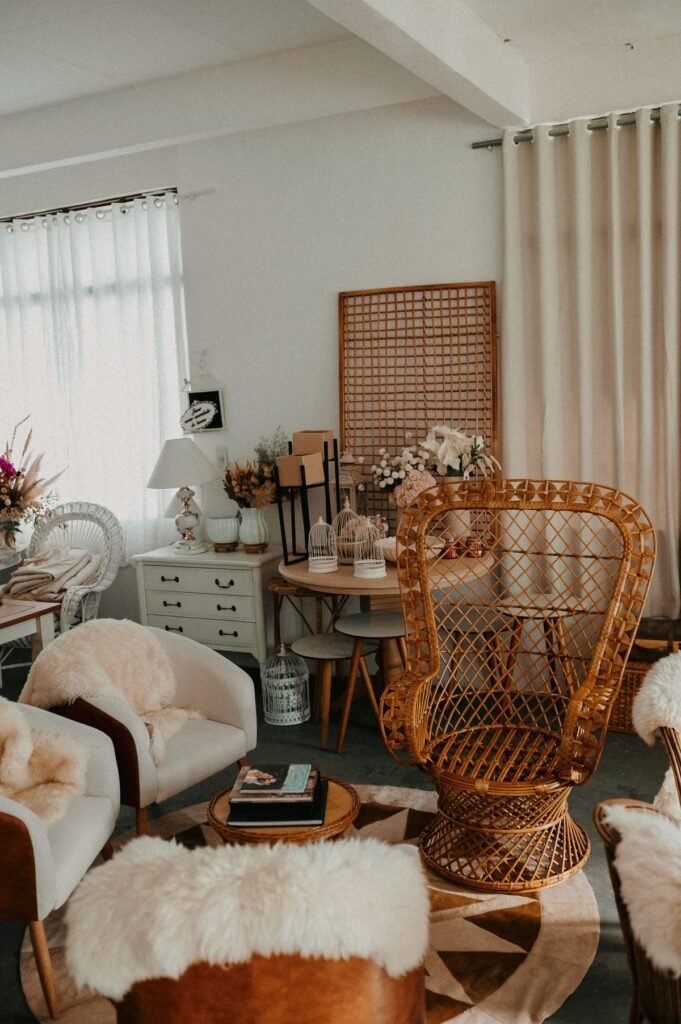
Clay is the next layer: a terracotta vase, a couple of pots, a handmade bowl on the coffee table. Choose three or four objects, group them where you will see them daily, and leave empty space around them. Brass is the metal of afrohemian living room ideas — one bowl, one lamp base, one tray is enough to catch the light in the evening. Low seating suits lounging, less so older guests — keep one firmer chair with arms if people often visit.

Layering Without Clutter
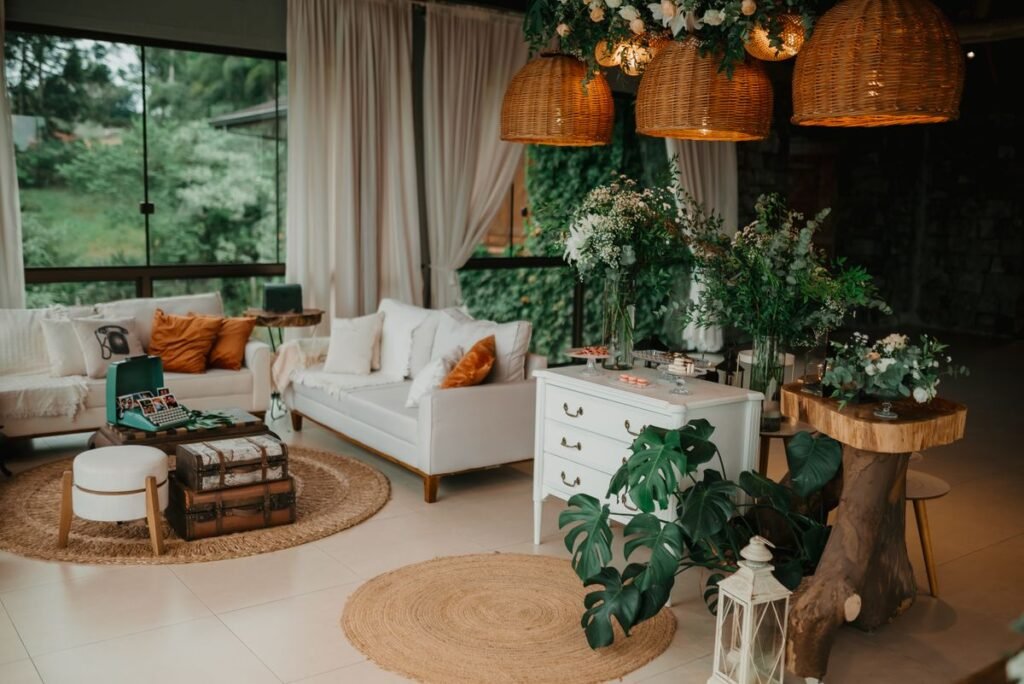
Layering is where afrohemian living room ideas succeed or fail, and the difference is usually one piece too many. Start with the floor: a large, flat jute or sisal rug defines the seating area and should reach under the sofa and chairs’ front legs. Add a smaller, softer rug on top — the one you can wash or swap with the seasons.
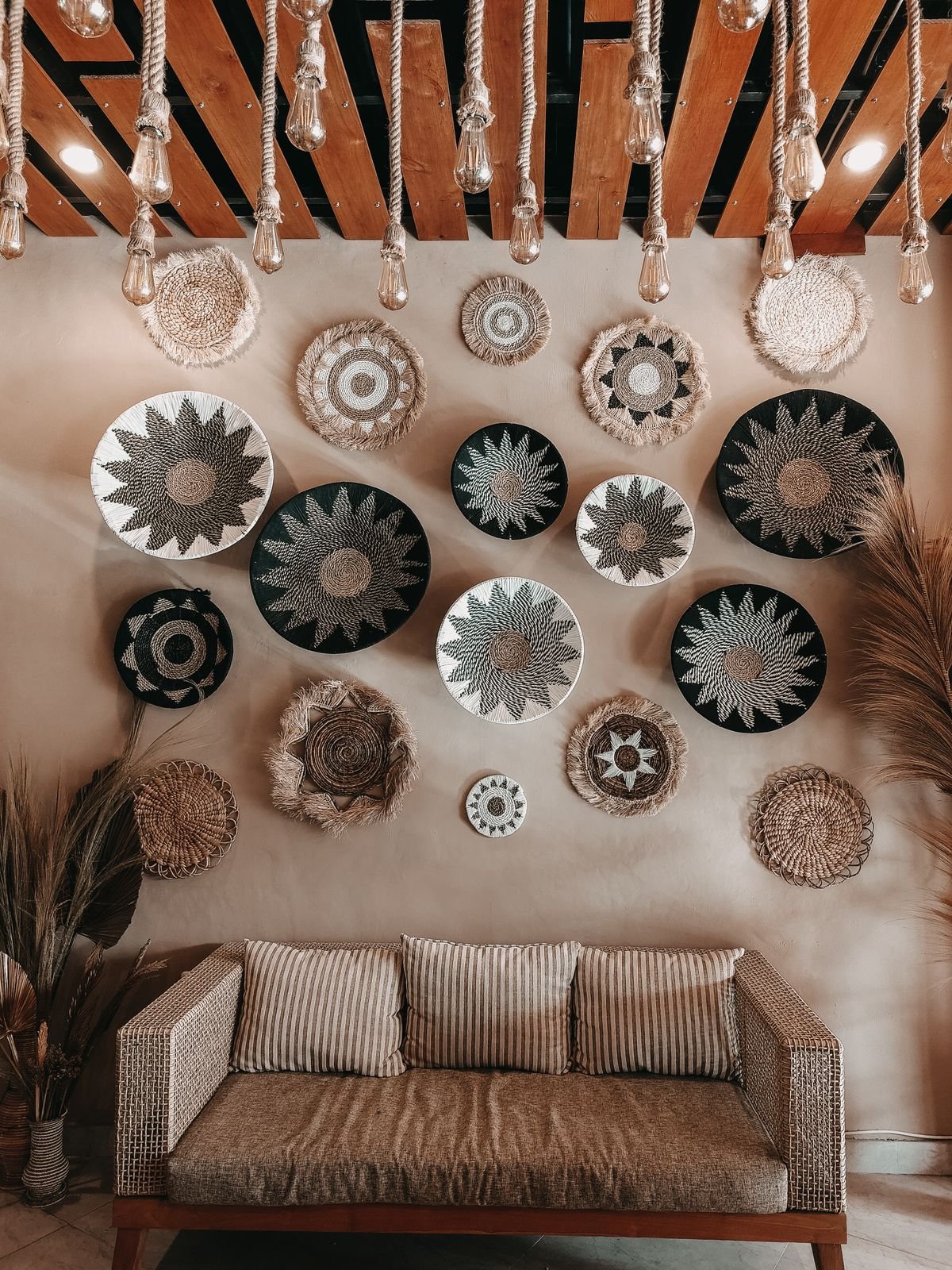
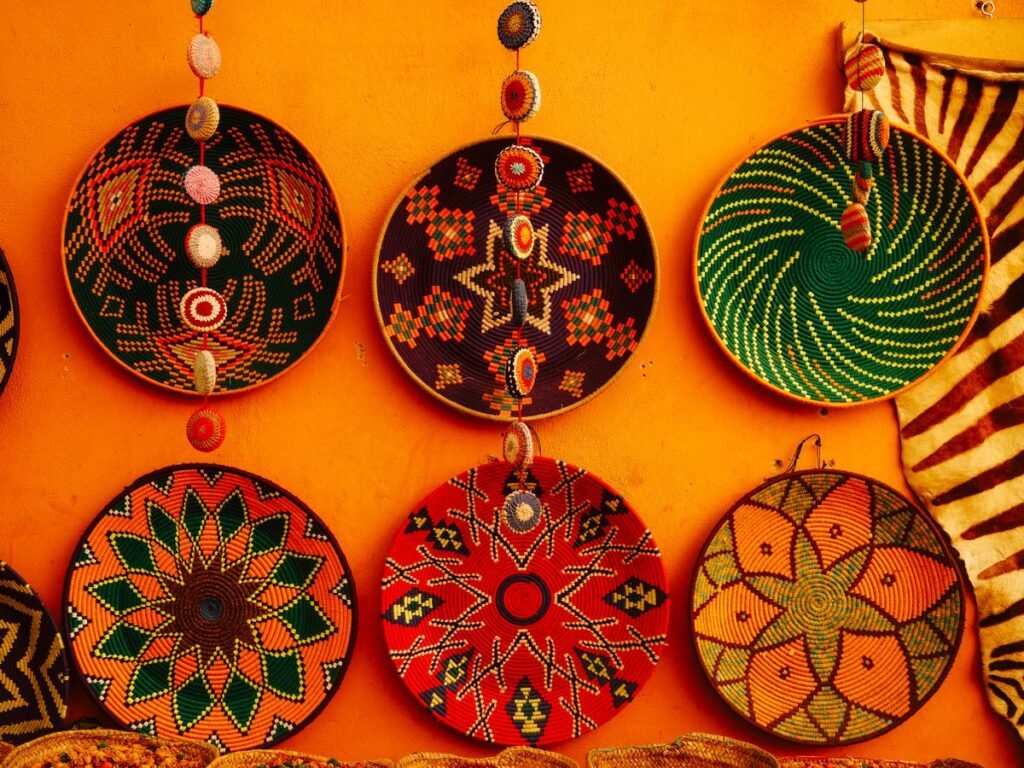
Walls come next. A basket wall works where a single large print can feel stiff, because mixed sizes, weaves, and depths give the wall movement. Lay out five to nine baskets on the floor first, mix round and flat shapes, and leave space between them.
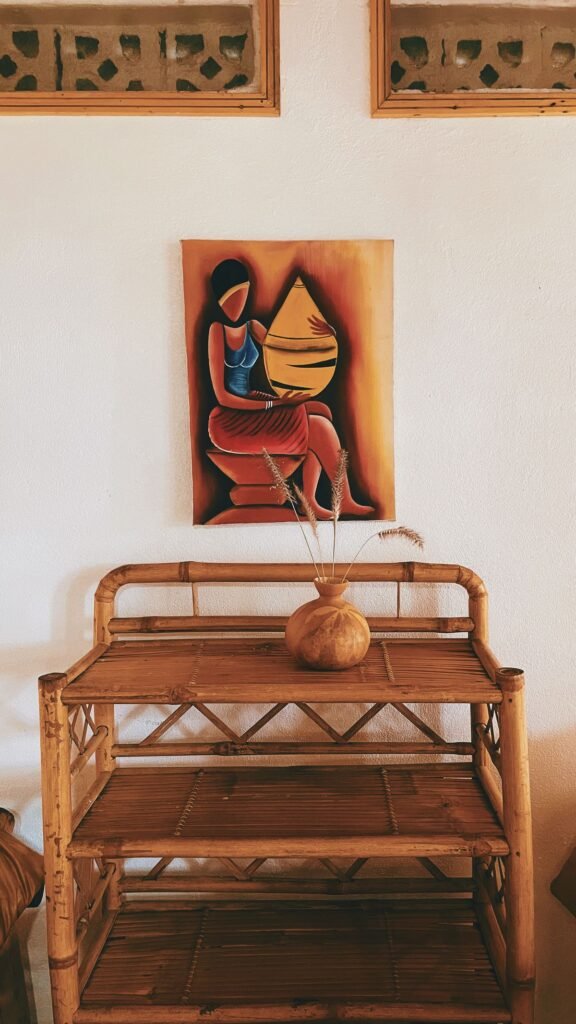
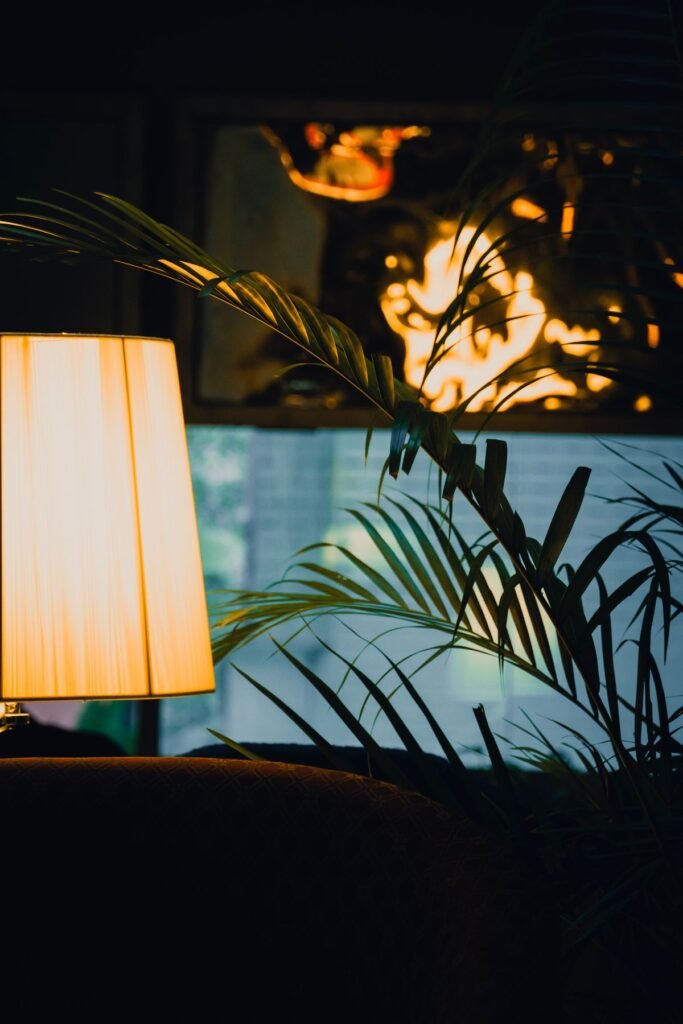
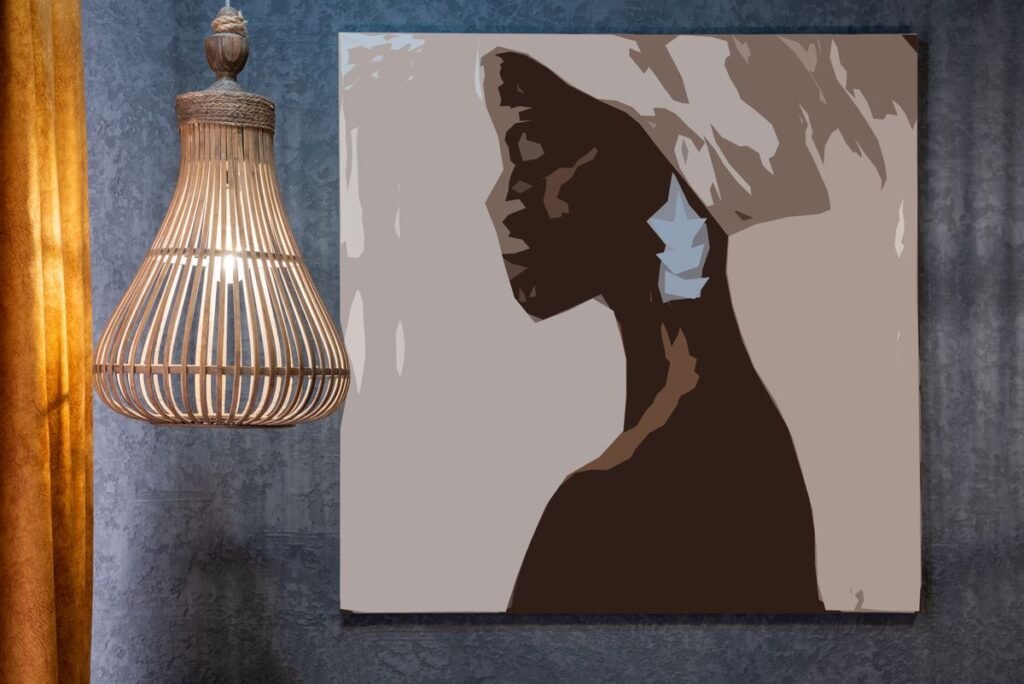
Art follows the same rule: one strong piece beats a gallery wall of small prints. Look for a portrait, textile panel, or carved piece sized to fill about two-thirds of the wall above the sofa, hung at eye level when seated. Then step back and count: more than three strong patterns or pieces, and one goes away for a week. Plants help — one tall, one trailing, one medium. Finish with warm, low light; our living room lighting guide covers layering those three sources without flooding the room.
What to Spend On, What to Save On
The rug is the piece worth spending on in afrohemian living room ideas: it is the hardest to swap and it sets the palette for everything else. A good flat-weave rug in the right size will outlast three rounds of cushions. Second, one bold piece of art or one good chair.
Almost everything else can be saved on. Baskets, cushions, throws, clay pots, and plants carry most of the look for very little money, and you can rotate them when you get bored. That is the budget logic of afrohemian living room ideas: spend where the room is built, save where it is dressed. Renters get the best of this deal — textiles, baskets, and plants change a room completely without paint or new furniture. Secondhand stools and baskets are worth a look — check for wobble, damp smells, and cracks.
What to Skip — and How It Differs From Boho and Neo Deco
Skip the matching set sold as an “afrohemian bundle” — the style is built on pieces that do not match, so a bundle that arrives together defeats it. Skip the scatter of tiny objects: twelve small things on a shelf read as clutter, three or four grouped objects read as a collection.
Plain boho is the closest cousin, but lighter and paler: white walls, macramé, pale wood, fringe. Afrohemian living room ideas are warmer and deeper, with more contrast and geometry than fringe and tassels. Mostly white with a few plants is boho; warmth first is afrohemian.
Neo Deco is the opposite direction: 1920s glamour — chandeliers, velvet, brass, symmetry — and it wants to look dressed up. Afrohemian borrows from craft and earth, and it wants to look lived in. If you want that glamour, our Neo Deco living room ideas show how it works — but do not run both styles in one room. A chandelier above a mudcloth sofa fights the low, easy feeling.
Frequently Asked Questions
What is the difference between afrohemian and bohemian?
Bohemian is the looser, paler cousin: white walls, macramé, light wood, fringe. Afrohemian keeps the looseness but builds on African textiles and craft — mudcloth, kente, baskets, carved wood. Light and airy is boho; warmth and pattern first is afrohemian.
How many patterns can one living room take?
Three strong patterns at most in afrohemian living room ideas, and one should lead. A strong pattern is mudcloth or kente; everything else stays quiet — a small repeat, a woven texture, or plain. If your rug is patterned, keep the cushions plain. In doubt, take one pattern away for a week.
Can I do afrohemian in a small living room?
Yes — most of it is textiles. The rule for afrohemian living room ideas is the same in a small room: keep the biggest wall light, let a rug and a throw carry the warmth, and use one bold piece of art instead of a basket wall plus a gallery. One strong pattern, breathing room, no more than three.
What should I buy first for an afrohemian living room?
The largest warm surface — usually a rug, or a big throw if the rug has to wait. That one piece sets the palette. Live with it for a week, then let the next purchase answer a gap you can see, like a bare wall or a cold corner.
A Room That Looks Collected
Afrohemian living room ideas do not come from buying the look in one go. They come from warmth first, one pattern leading, texture over matching sets, and stepping back to count. Pick the palette, let one textile lead, spend on the rug and one bold piece, save on the baskets and cushions, and skip the bundle and the scatter. Browse more living room ideas for the next change, and give each new piece a week.
Photos in this article are from Pexels.