
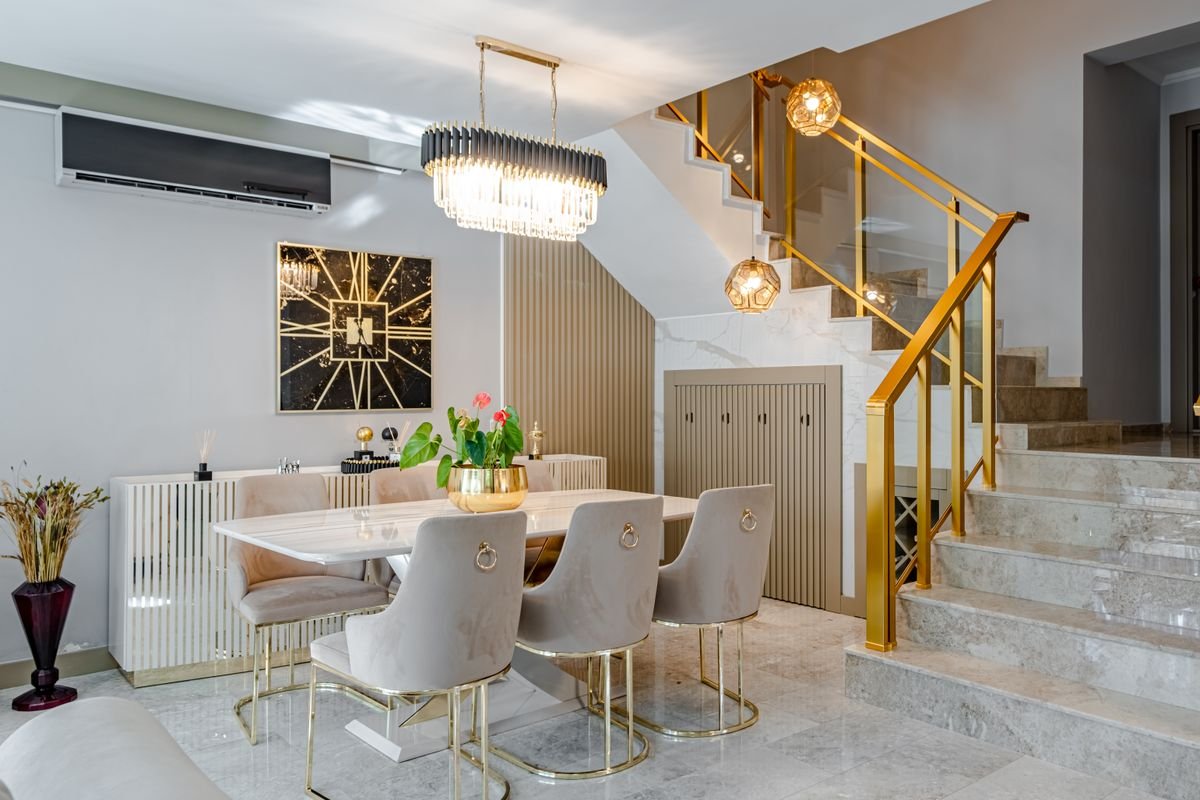
Most dining tables do not fail because they look wrong. They fail because they get in the way of the meal, the homework, the board game, or the conversation that was supposed to happen around them. Dining table decor works best when it is planned around that everyday use first, and around how the table looks in a photograph second. A centrepiece you have to move every night, a runner that slides under every plate, or candles that block the person sitting opposite you are not really decor. They are chores that happen to look nice.
This guide takes a different route. Instead of a checklist of looks to copy, it works through the decisions that shape a table over time: what sits in the middle, what goes underneath the plates, how high things should be, and how the same table can shift from a Tuesday dinner to a larger gathering without a full restyle. Keep what suits your household, ignore what does not, and let the table stay usable in between.
Table of Contents
Start With How You Actually Use the Table
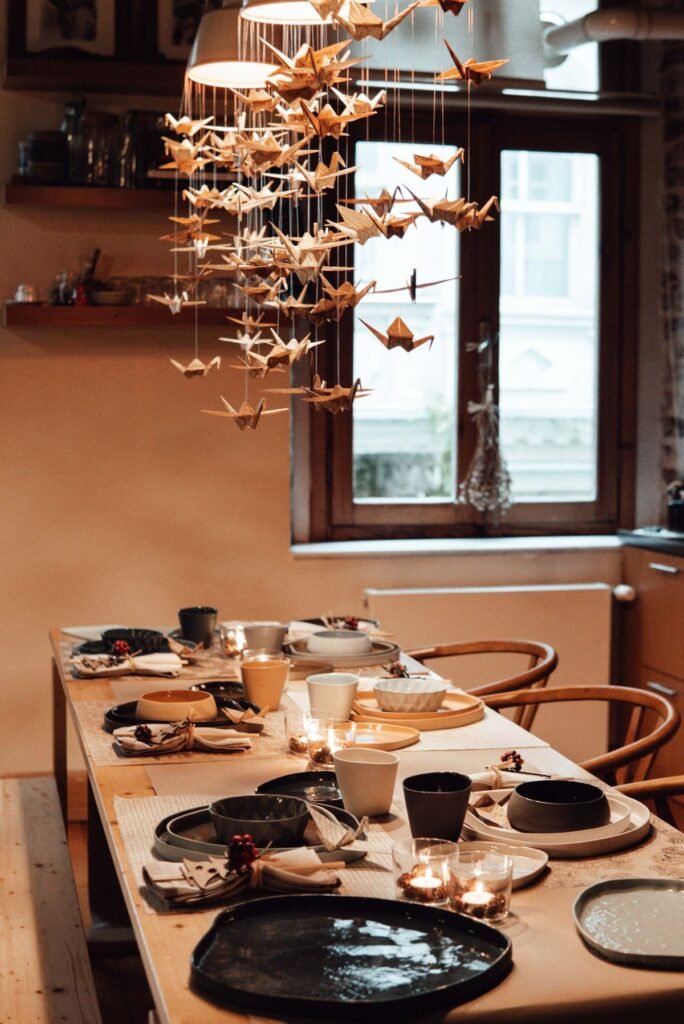
Before you buy anything, watch the table for a week. Who sits where, and does anyone pull a chair out into a walkway? Do school bags, laptops, or mail land there by default? Is the table also where someone folds laundry, pays bills, or plays games on a Sunday? The answers matter more than any style label, because a table that has to clear completely twice a day needs a very different centrepiece from a table that mostly stays set. That habit of watching first is the simplest form of dining table decor planning.
Measure the working space, not just the table. Leave enough room for a plate, a glass, and elbows, and then see what is left in the middle. On a small round table, that middle strip may be only a handspan wide, which suits a single low bowl or a small plant. On a long rectangular table, the middle can hold a longer, lower arrangement, but it still has to leave serving dishes somewhere to land. If you cannot set down a hot dish without moving three objects first, the arrangement is too big for the table, however good it looks empty.
Let the Centrepiece Earn Its Space in Dining Table Decor

A good centrepiece does one job well: it gives the table a focal point without taking over the work of the table. That usually means low, narrow, and easy to move in one motion. A bowl of fruit, a short vase with a few stems, a tray holding two or three small objects, or a single candle arrangement can all do this. What they share is a footprint you can work around, not a display that forces plates to the edges. In dining table decor, that kind of restraint usually looks better than a larger display.
Height is the test most people skip. Sit down, look across the table, and check whether you can see the other person’s face without leaning. If a tall arrangement sits between you, conversation has to work around it, and guests will instinctively move it. That is fine for a photograph, and annoying at dinner. Lower arrangements, or a tall piece pushed to one end of a long table, keep the middle of the conversation open.
Think about upkeep, too. Fresh flowers look lovely, but they need water, trimming, and replacing, and they drop petals onto a table that also holds food. A potted plant lasts longer, though it needs light and a saucer that will not mark the wood. A bowl that can hold fruit in one season and pinecones or ornaments in another is often the most practical choice, because it changes without a new purchase each time. The best centrepiece is the one you will actually maintain, not the one that looks best on the day you buy it.
Runners, Placemats, or Bare Wood

The surface underneath the plates changes both the look and the cleaning. A bare wood table shows off the grain and is easy to wipe, but it also shows every ring, scratch, and heat mark. A runner adds colour down the centre and protects the middle, while leaving most of the wood visible. Placemats protect the spots where plates actually sit, and they are easier to wash than a full cloth. A full tablecloth hides a worn surface completely, but it needs laundering and it can slide. Getting that layer right is half of dining table decor.
There is no single right answer, and the choice often changes with the household. If children eat at the table, washable placemats usually win, because one spill does not mean changing the whole covering. If the table is used for work during the day, a runner that stays in place can mark the dining zone without getting in the way of a laptop. If the table itself is the feature, perhaps an older wood table with a good grain, leaving it bare for most meals and dressing it only for gatherings makes sense.
One practical check helps: lay out the covering, set a place, and then try to slide the plate and lift a glass. If the runner bunches, the placemat curls, or the cloth pulls, it will do the same thing during a meal, only with food on it. Heavier fabrics, a non-slip pad under a runner, or placemats with a little weight to them solve most of this. Style matters, but a covering that stays put matters more, because no one enjoys eating while managing the table itself.
Height, Light, and Talking Across the Table
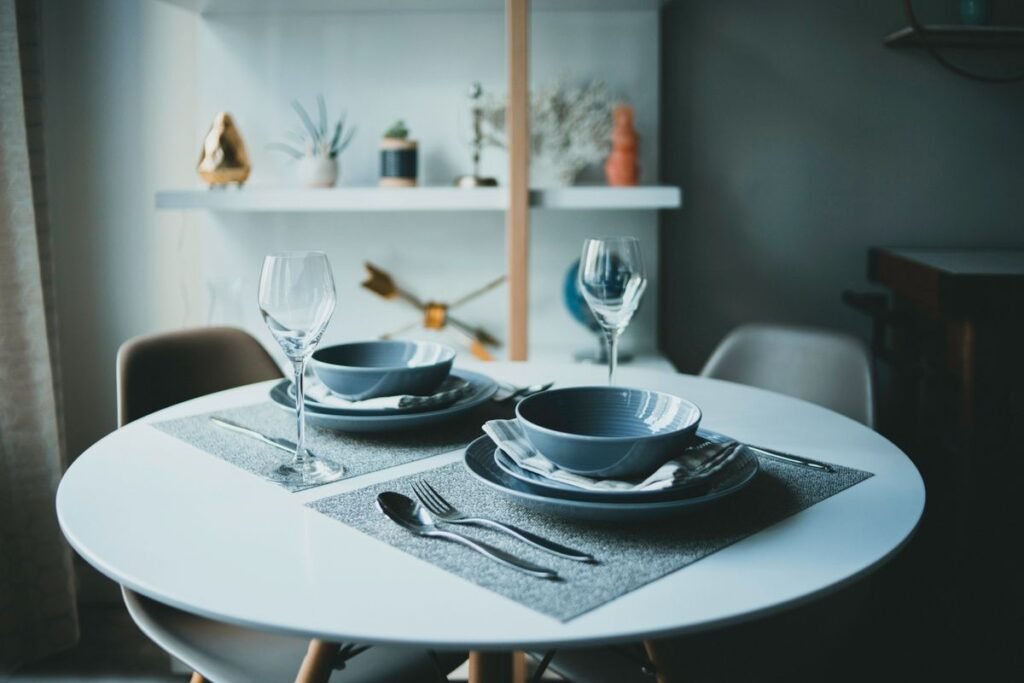
Light does as much work as any object on the table. A pendant that hangs too high leaves faces in shadow, while one that hangs too low gets in the way of serving and sightlines. As a rough guide, a pendant over a dining table usually sits well above head height when seated, with the light falling on the table rather than into people’s eyes. Candles help in the evening, but they should sit low enough that flames do not flicker near sleeves, napkins, or low-hanging stems. In dining table decor, light is part of the setting, not an afterthought.
Height applies to everything else, too. A tall vase, a candlestick, or a stack of books can look striking from the doorway, and still be a problem once everyone is seated. Test arrangements from a chair, not from standing height. Move a tall piece to the sideboard for the meal if needed, or use two shorter pieces at either end of a long table instead of one tall piece in the middle. The table should frame the people at it, not compete with them.
An Everyday Setting That Still Looks Finished

An everyday setting is not a lesser version of a formal one. It is a version that can survive a normal week. That usually means a simple base that stays in place, such as a runner or a set of placemats, a centrepiece that does not need daily attention, and place settings that are easy to reach. If setting the table takes more than a few minutes, people will stop doing it, and the table will drift back to being a landing spot for everything else.
Keep the everyday pieces in one place. A drawer, a shelf, or a tray near the table for placemats, napkins, and candles means you are not hunting through cupboards before dinner. The same thinking applies to other tables in the house: the approach used in coffee table styling works here too, because a surface that has a clear home for its pieces is much easier to keep tidy than one that relies on willpower alone.
A Gathering Setting Without Buying a Whole New Set

For a larger meal, the everyday base can stay, and a few changes on top of it will do the work. A tablecloth over placemats, a second set of glasses, or candles instead of the usual centrepiece can make the same table feel different without a new set of dishes. The key is to add one layer at a time and check the space after each addition, because a table that seats eight needs more elbow room, not more objects. That is dining table decor working for a gathering, not against it.
Plan where serving dishes will go before guests sit down. If the centrepiece stays, will there still be room for a main dish, a salad bowl, and a jug? If not, move the centrepiece to a sideboard and use a lower, narrower arrangement, or leave the centre clear and let the food be the display. A side table or a nearby counter for extra dishes also helps, especially in a smaller room. Guests notice when they can reach what they need without asking someone to pass everything around a tall arrangement.
It is also worth thinking about the room around the table, not just the table itself. Extra chairs need a place to come from and a place to go back to. A clear path to the kitchen keeps serving calm. And if storage is tight, ideas from open shelving kitchen layouts can help, because dishes and glasses that are easy to reach are much more likely to be used for gatherings, and put away again afterwards, than pieces stored at the back of a high cupboard.
Changing the Look With the Season
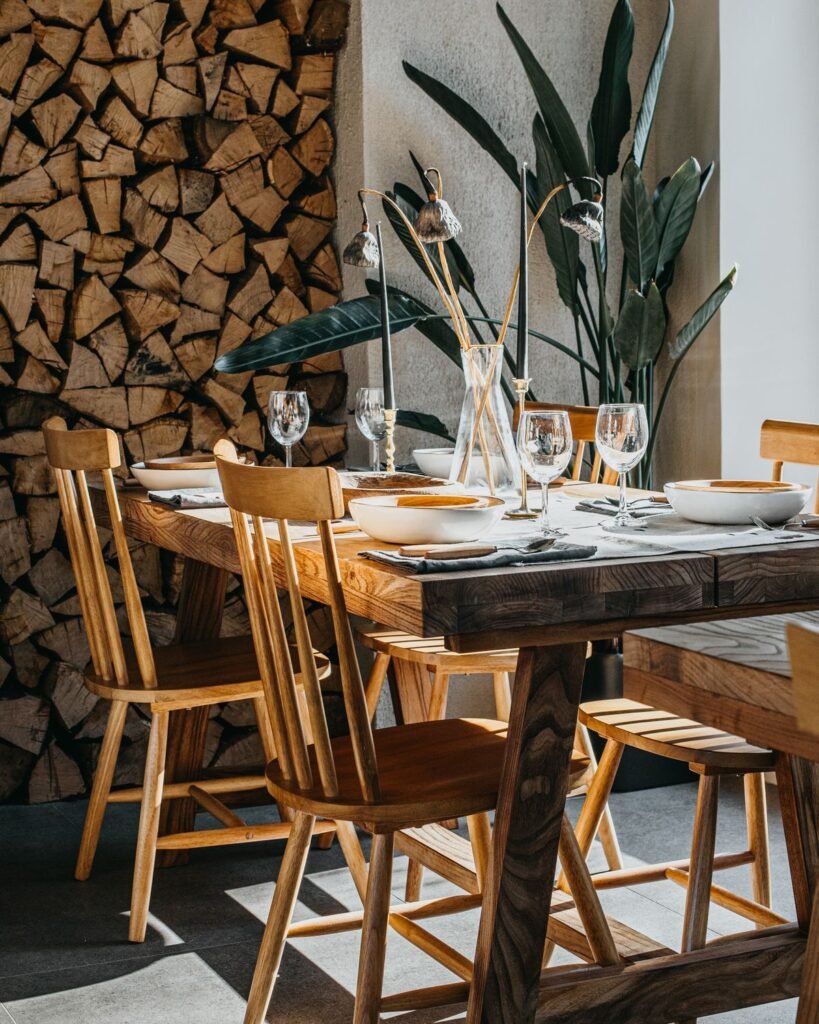
Seasonal dining table decor is easiest when the base stays the same and only the top layer changes. Keep your usual runner or placemats, and swap the bowl contents, the napkins, or a few stems. In spring, that might mean fresh green stems and lighter colours. In autumn, it might mean warmer tones and a bowl of seasonal fruit. In winter, candles and evergreen stems can carry the look without a complete restyle. The table still feels like itself, just dressed for the time of year.
The risk with seasonal changes is storing everything else. A box of decorations that lives in a garage or a high shelf is easy to forget, and a box that lives in the dining room quickly becomes clutter. Keep seasonal pieces small and few: one bowl filler, one set of napkins, and one centrepiece element per season is usually enough. If a piece has not been used in two seasons, it is probably not earning its storage space.
Keeping Dining Table Decor Easy to Live With

Upkeep decides whether a table stays decorated or slowly returns to bare wood and a pile of mail. Choose materials you are willing to clean. Linen needs washing and sometimes ironing, while cotton placemats can go in a normal wash. Wood needs coasters and trivets in the right places. Glass shows fingerprints, and candles leave wax. None of these are reasons to avoid a material, but they are reasons to place it where its upkeep fits your routine.
Storage is the other half of upkeep. Every piece on the table should have a home off the table: a drawer for placemats, a shelf for vases, a tray for candles. When a piece has no home, it stays on the table by default, and then the next piece joins it. A short reset at the end of the day, putting the table back to its everyday base, takes a minute and prevents that drift. It is not about perfection. It is about the table being ready for the next meal without a clear-up first.
If you want fresh ideas without buying on impulse, browsing royalty-free photo collections such as Pexels dining table decor photos can help you see how a similar table is arranged, and what is left clear. Save the arrangements that match your table size and your routine, not just the ones that look striking. The best guide is your own table, used over a few weeks, with a few pieces that earn their place by being useful, easy to clean, and pleasant to sit beside.
A table that works on a normal day will also work for a gathering, with a few changes on top. Start with how the table is used, keep the centre low and clear, choose a covering you can maintain, and let the season change only the top layer. Dining table decor, done this way, is not a display to protect. It is a setting that invites people to sit down, stay a while, and come back to the table again tomorrow.


