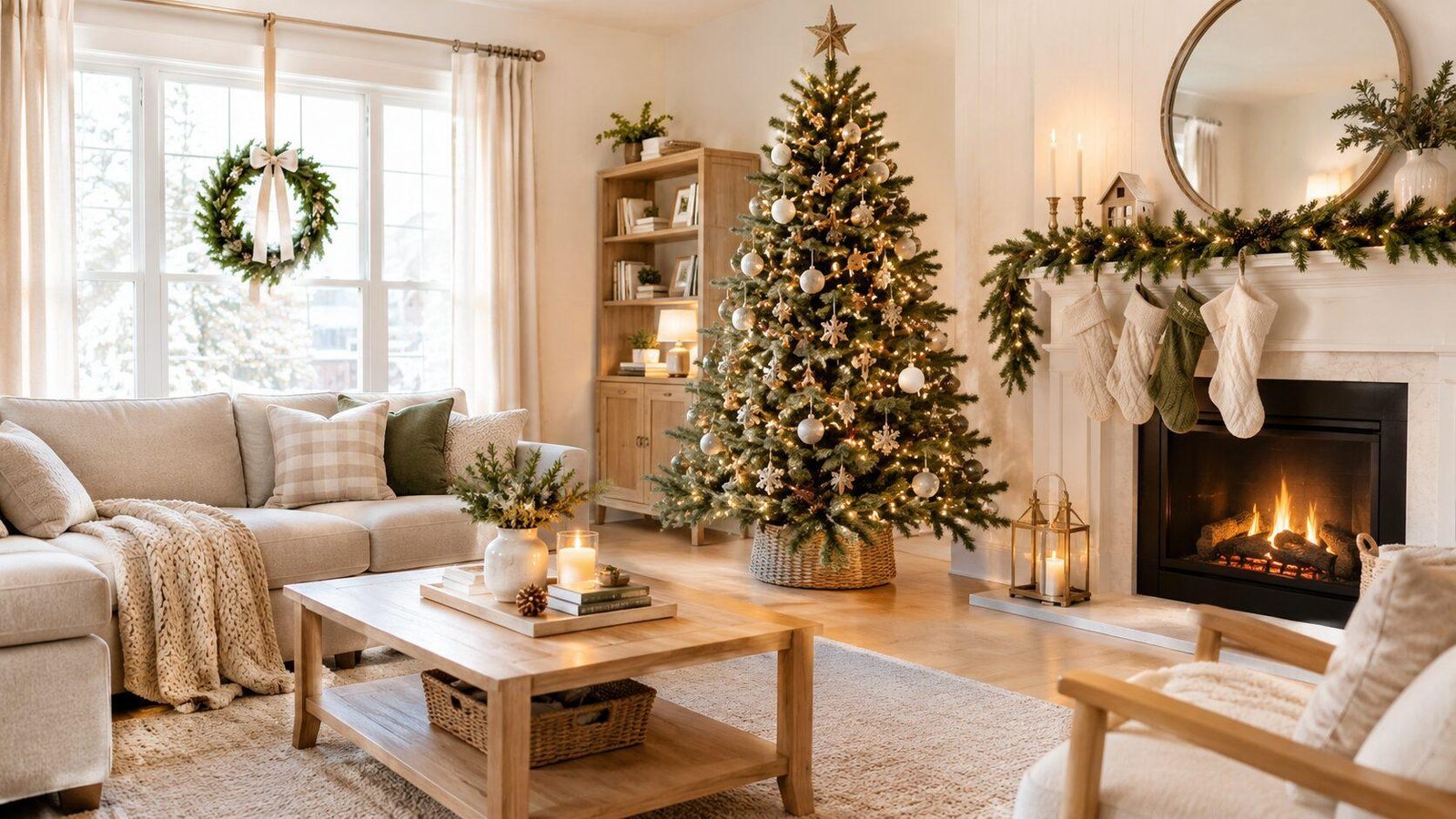
Decorating your home for Christmas gets easier the moment you stop treating it as one big project. It is six or seven small ones, one per room. The best-looking houses decided early — one palette, one focal point per room.
This guide is the plan: each room in decorating order, what to buy first and what to skip, and links to the guides where a room deserves one of its own. The mantel, the tree, the porch and the dining table all have their own posts; this one is about how they fit together.
Table of Contents
Start With a Plan, Not a Shopping Trip
The most expensive way of decorating your home for Christmas is to start at a shop. Start in your own storage: pull out last year’s decor and sort it into keep, donate and replace. Most homes already own the bones of the season — a wreath, working lights, a box of ornaments — and need only two or three new things.
Pick a palette first when decorating your home for Christmas: two or three colours, no more. Green, cream and gold is calm; red, white and wood is classic. Run the same ribbon through the whole house — tree, mantel, porch — because that repetition makes rooms look like one home. Decorate in order of who sees what: entryway and living room first, dining room next. If you run out of time, the rooms that matter most are already done.
The Entryway: First Impressions in Five Minutes
When decorating your home for Christmas, the entryway does the most work with the least decoration. One wreath on the door at eye level tells visitors the house is ready. Inside, a small tree or a bowl of pinecones on the entry table and a runner rug in your palette is enough.
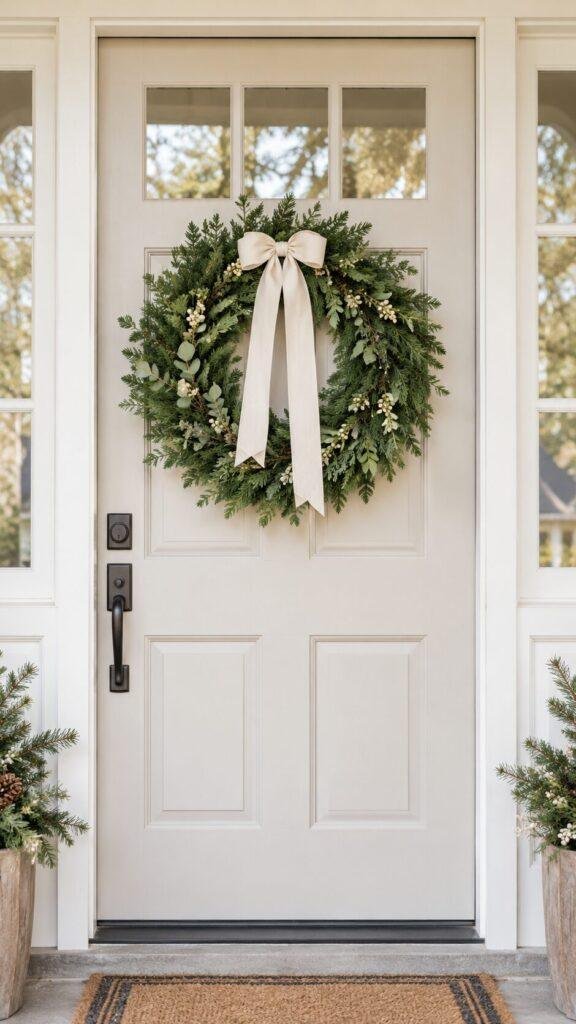
What matters is what you do not block: the door swing, the coat hooks, a clear path to the living room. A garland across a narrow hallway trips everyone who walks through it. If the entryway is small, a mirror does more than another decoration — it bounces light around and makes the space feel bigger. Our wall mirror entryway ideas show how to place one with the wreath. A boot tray matters more than a second wreath: wet boots on a rug undo the whole look in an afternoon.
The Living Room: Where the Season Lives
The living room carries the two biggest pieces: the tree and the mantel. Place the tree in a corner or by a window, easy to see from the sofa, and keep it three feet from any heat source. If the room is small, our Christmas tree ideas for small spaces cover the slim shapes that fit. The mantel needs less than people think: a slim garland, candles, a few ornaments, one section left clear. The full layering is in our Christmas mantel ideas guide.
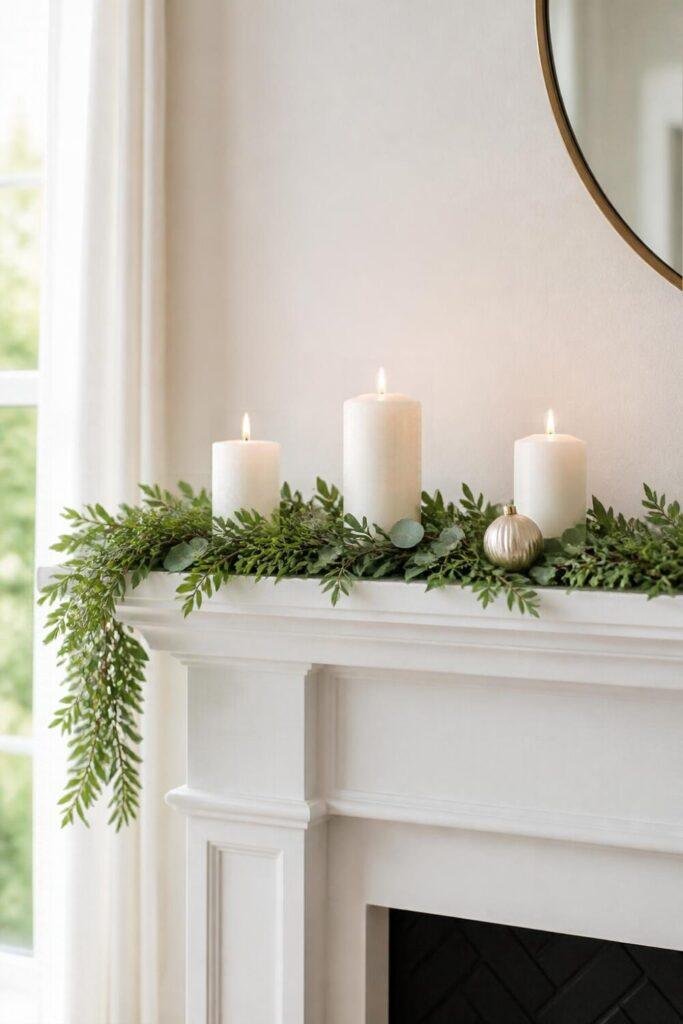
Here, when decorating your home for Christmas, the palette earns its keep: textured pillows, a soft throw, one cluster of candles on the coffee table. The trade-off is shelf space: every surface you decorate is one you cannot use for a mug or a book. Leave one shelf and one side of the coffee table undecorated. A living room that still works as a living room feels more festive than a shop window.
The Dining Room: Set It Once, Enjoy It All Month
The dining room is the easiest room to get right — the table does the decorating for you. A runner, simple plates and a low centerpiece are enough — low matters, because a tall arrangement turns dinner into a shouting match around the flowers. Our Christmas decorations for a dining room table guide has the full set.
When decorating your home for Christmas, set the table once and leave it set through the season. It looks ready every time someone walks past, and it saves you from decorating the room twice. The one condition: if the table doubles as a desk, keep the centerpiece removable. A bowl you can lift off beats a fixed arrangement dismantled every afternoon. Use unscented candles near food — a scented one fights the smell of the meal.
The Kitchen: Small Touches That Survive Cooking
The kitchen is the hardest room when decorating your home for Christmas — heat and steam kill delicate decor, and counter space is already scarce. The rule is simple: decorate up high and out of the way. A ribbon on a cabinet handle, a bowl of oranges or cranberries on the counter, a small wreath on a window. All of it survives cooking.

When decorating your home for Christmas, the trade-off in the kitchen is counter space: every decoration is a surface you cannot cook on. Keep the chopping board and mixing-bowl spots clear. Never put a garland over the stove — heat and dried greenery do not mix — and keep candles away from the hob. If you want one bigger gesture, make it the window: a wreath or lights along the frame, visible from outside, costing no counter.
Bedrooms and Bathrooms: Keep It Calm and Small
Decorate these rooms least: a bedroom is for resting, a bathroom is for five minutes — neither needs a display. Pick one thing per room and stop there: a small tree on the dresser, festive bedding, or a garland on the headboard wall in the bedroom; a festive hand towel, a small bowl of ornaments, or a mini wreath on the mirror in the bathroom.

Do not treat them like the living room when decorating your home for Christmas. A bedroom full of lights is hard to sleep in, and a bathroom full of decorations leaves nowhere to put a toothbrush. Keep the surfaces clear. For overnight guests, the spare bedroom is the one place extra effort pays off — a small tree and a candle, no extra purchase needed.
Outdoors: The Porch and the Windows
Outside, the weather decides what works. The porch needs things that survive wind and rain: a wreath on the door, lanterns that will not blow over, planters of greenery that look better after a frost. Our Christmas porch decor guide covers which planters and lanterns hold up through a wet December.
When decorating your home for Christmas, windows are the other half: one wreath per window, or lights along the frame, reads clearly from the street and costs almost nothing. Keep decorations away from curtains and blinds. Do the outdoor lights on a dry day, tested before you hang them — nothing is worse than a dead string halfway up a ladder in the rain. If time is short, light the porch and front windows only.
What to Buy First — and What to Skip
If you are buying anything for decorating your home for Christmas, buy in this order. First, light strings — check the ones you own, because a dead string on the day is the most common December frustration. Second, a roll of ribbon in your palette colour — one ribbon repeated through the house ties every room together. Third, candles, unscented for the table and scented for the hallway. Fourth, greenery, fresh or faux — it fills more space for less money than any ornament.
What to skip matters just as much: matching sets for every room cost more and look less personal than a few repeated colours. Skip single-use themed items, and skip a second tree before the first one is placed and lit. The best Christmas decor is what you already own, plus one or two things you will use again next year. For a cleaner look, our modern Xmas decorations guide shows the same rooms with fewer colours and simpler shapes.
Safety and Storage: The Two Things People Forget
Safety first — December is the worst month for house fires. Keep the tree three feet from any heat source and never block an exit with it. A live tree’s stand should always have water. Lit candles should never decorate a tree, and tree lights should be off whenever you leave home or go to bed. Check strings for frayed wires, and keep candles a foot from anything that can burn. The National Fire Protection Association has the full holiday safety guidance — worth a read before you start.
When decorating your home for Christmas, storage is what everyone forgets until January. Plan it now, while you are putting things up. Use labeled bins, wrap fragile ornaments individually, and store lights on a spool or cardboard so they do not tangle. Put a note in the bin with your palette, so next December starts in minutes. Forgetting storage is how a house ends up with three half-empty bins and a string of lights nobody can untangle.
Frequently Asked Questions
Where should I start decorating my home for Christmas?
When decorating your home for Christmas, start with the entryway and the tree. Then the mantel and dining table, then small touches elsewhere. If you run out of time, the rooms that matter most are already done.
How do I decorate for Christmas on a budget?
When decorating your home for Christmas on a budget, start with what you already own. Then spend on the things that repeat through the house: ribbon in one colour, candles, greenery and working light strings.
When should I start decorating?
After Thanksgiving is common. Fresh greenery and a live tree last longer added closer to Christmas, so put the lights, ribbon and ornaments up first and save the fresh pieces for last.
How do I keep it from looking crowded?
When decorating your home for Christmas, one focal point per room and one or two small touches is plenty. Leave empty space on purpose — one clear shelf, one clear side of the coffee table.
A House That Still Feels Like Itself
Decorating your home for Christmas works best when the house still feels like your house, just dressed for the season. Pick a palette, decorate in order, give each room one focal point, and stop when it is done.