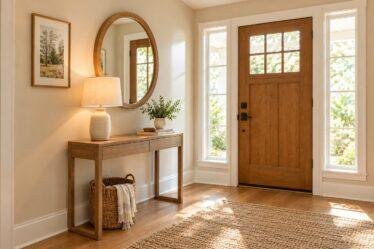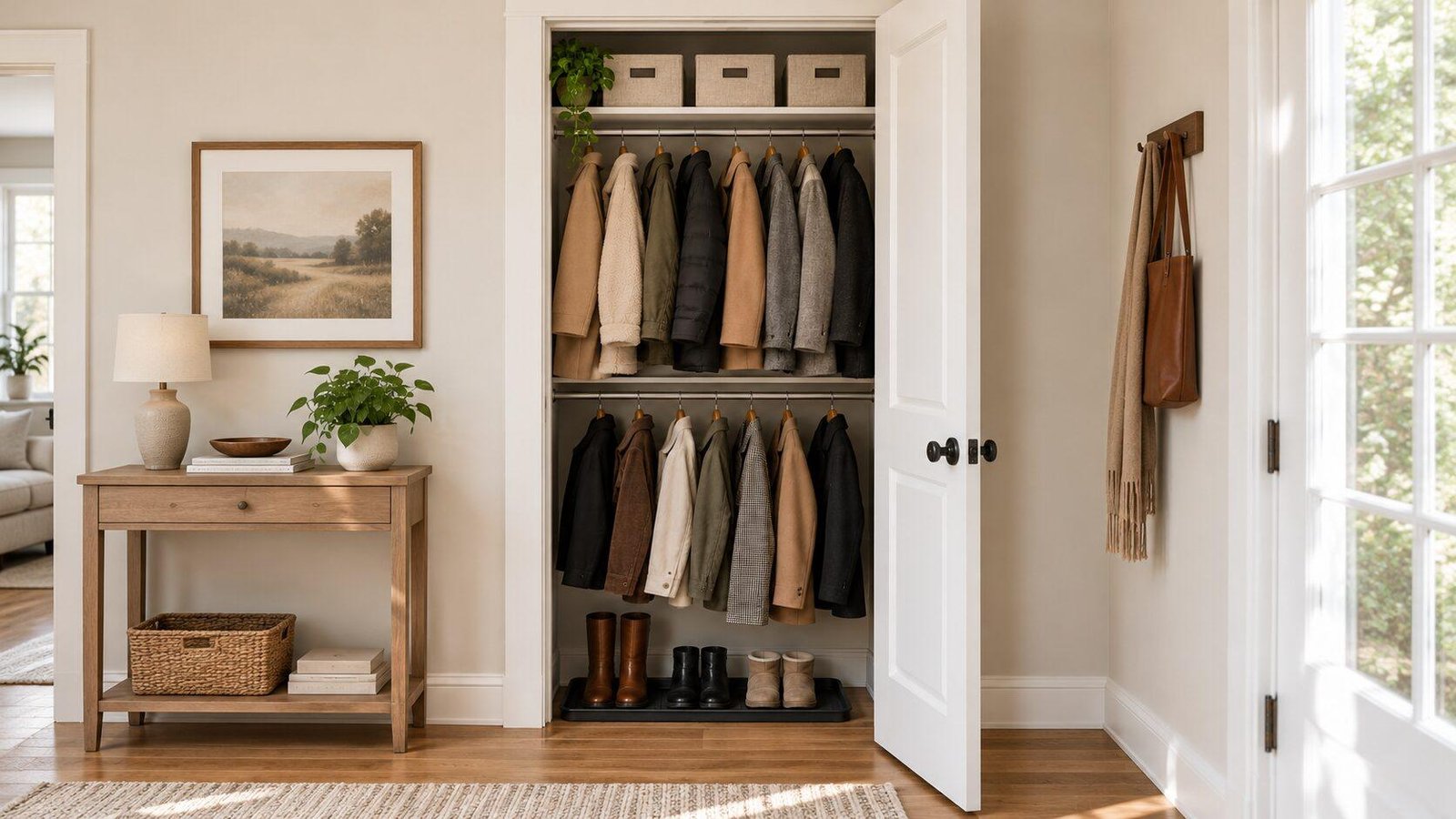
An entry closet is the hardest-working closet in the house, and the one with the least room to spare. Everything in it is either on its way in or on its way out: the coat you grabbed this morning, the shoes you kicked off when you came home, the umbrella that is still dripping. A bedroom closet can hold things you wear once a month. An entry closet cannot afford that luxury — and that is where good entrance way closet ideas start.
That is why most entrance way closet ideas that copy bedroom-closet advice fall flat. A second rod and matching bins will tidy the space for a week, but they do not answer the real questions: what belongs at the door at all, where wet things go, and what happens when guests arrive with coats of their own. This guide answers those questions instead.
Table of Contents
What an Entry Closet Is Actually For
Before you buy anything, be clear about what an entry closet is. It is not a storage closet. It is a transit point, and that is the first thing entrance way closet ideas need to get right. Every item inside it should earn its place by being used at least a few times a week — the coat you wear to work, the shoes you reach for every morning, the bag you carry out the door. Anything used less often takes space from something used daily.
An entry closet also has two users, not one: your household and your guests. And unlike a bedroom closet, it has to cope with wet and dirty things — rain, mud, and snow come through the front door first, so the closet needs a floor that can get wet and a plan for drying. If your home has a larger defined entrance, our entrance foyer ideas cover how the closet fits into the room around it.
What Belongs at the Door — and What Doesn’t
Most entrance way closet ideas skip this step and go straight to buying bins, but the fastest way to fix an entry closet is to empty it completely and ask one question about each item: does this get used at the door, or does it just live here because there was nowhere else to put it? Daily coats stay. The shoes you wear most days stay. Bags, umbrellas, keys, and the dog’s leash stay. Off-season coats, shoes you wear once a month, sports gear, and the coat you keep meaning to repair all go elsewhere — to the bedroom closet or wherever that category lives.
Sorting entrance way closet ideas starts with being honest about the “maybe” pile. A coat you have not worn in two winters is not a maybe; it is a donation, and keeping it at the front door costs you the space a guest’s coat needs. The small things need the same honesty: keys, sunglasses, reusable bags, and the leash each need one fixed spot — a low shelf, a basket, a hook — or they spread across every surface in the entry. Keep the count low: one basket, one tray, one hook strip.
Coats: The One Job That Decides the Layout
The best entrance way closet ideas treat coats as the layout, not an afterthought, because coats take the most room and get used the most. Hang the coats your household wears this season at the front of the rod, in the order people reach for them. Give each person a hook or two as well, because a hook is what a coat actually lands on when someone comes in with their hands full. Children need hooks at their own height, or their coats will live on the floor.
The simplest entrance way closet ideas start here: leave two or three hangers empty on purpose — they look like a mistake until the first guest arrives, and then they are the difference between a welcome and a pile on the bench. Heavy winter coats need a strong rod and sturdy hangers; light jackets can share a hook. If the closet is too small for everyone’s winter coats at once, rotate: the coats in use stay, the rest wait in the bedroom closet until the weather turns.
Shoes and Wet Weather
Wet weather is where entrance way closet ideas earn their keep. The rule is simple: only the pairs worn this week live at the door, and they live on something that can get wet. A boot tray under the rack catches rain and mud; a small rack keeps daily pairs upright instead of in a heap. Wet shoes need air, not a closed box — leave the closet door open for an hour after a rainy walk home, or the smell will settle in and stay.
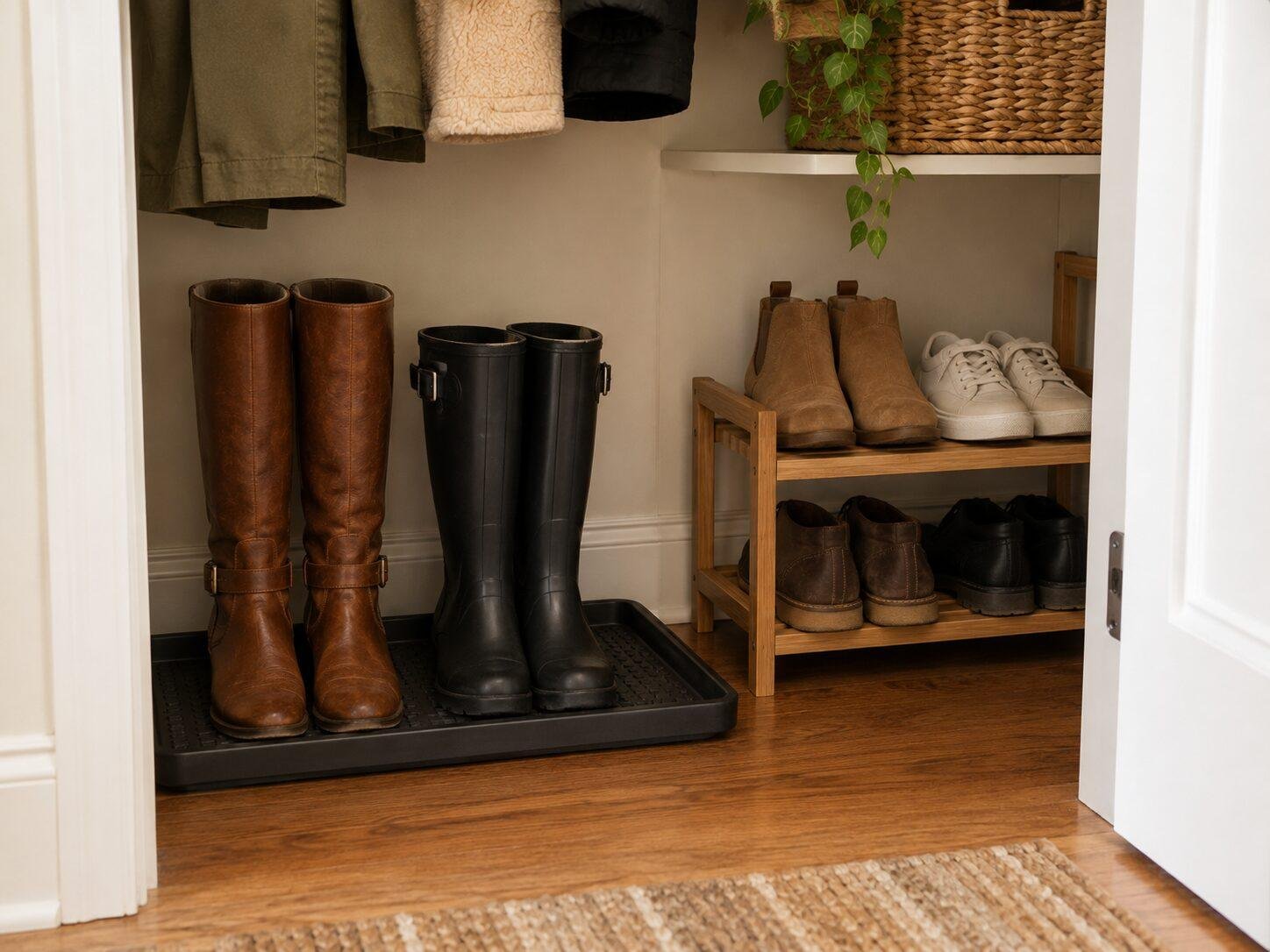
Among entrance way closet ideas for wet weather, umbrellas belong in a tall holder or a corner of the tray, not leaning against the wall where they drip onto the floor. If the closet floor is carpet or bare wood, a tray or a piece of washable matting is the cheapest insurance you will ever buy for it.
Guests: Leave Room Before They Arrive
Guests are the test most entrance way closet ideas forget. When someone arrives with a wet coat and nowhere to put it, the coat ends up on a chair, a bed, or a pile by the door. The fix is to leave space before anyone arrives: a few empty hangers, a clear section of the rod, and a spot for shoes that is not already full of your own.
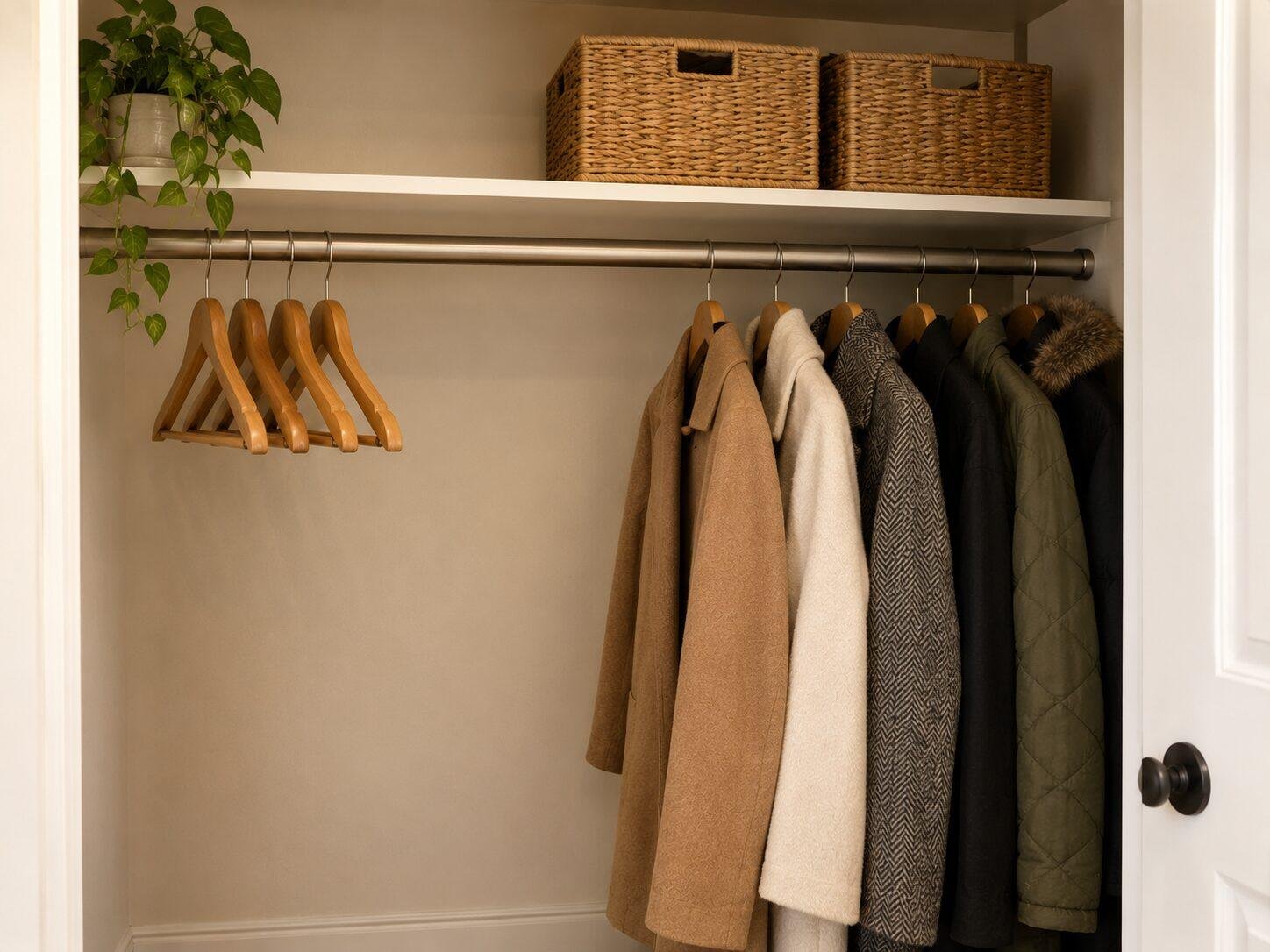
If your closet is too small to hold guest coats as well as your own, a row of hooks on the wall just outside it does the same job — guests do not care whether their coat is inside a closet or on a hook, as long as there is somewhere for it. The test is simple: could a stranger walk in, find a hook, and hang up a coat without being told where? If you need a place to sit while putting on shoes, our modern entryway bench ideas show styles with storage underneath.
Small Closets, Rentals, and No-Drilling Fixes
For renters, entrance way closet ideas have to work without drilling, and most entry closets are small in any case. Over-the-door hooks hold bags, scarves, and light jackets without a single screw. A tension rod below the main rod doubles hanging space for short jackets and children’s coats, and it comes out without a mark when you move. A freestanding shoe rack and a boot tray need no fixing at all, and stackable bins on the top shelf hold hats, gloves, and off-season items — keep heavy bins low.
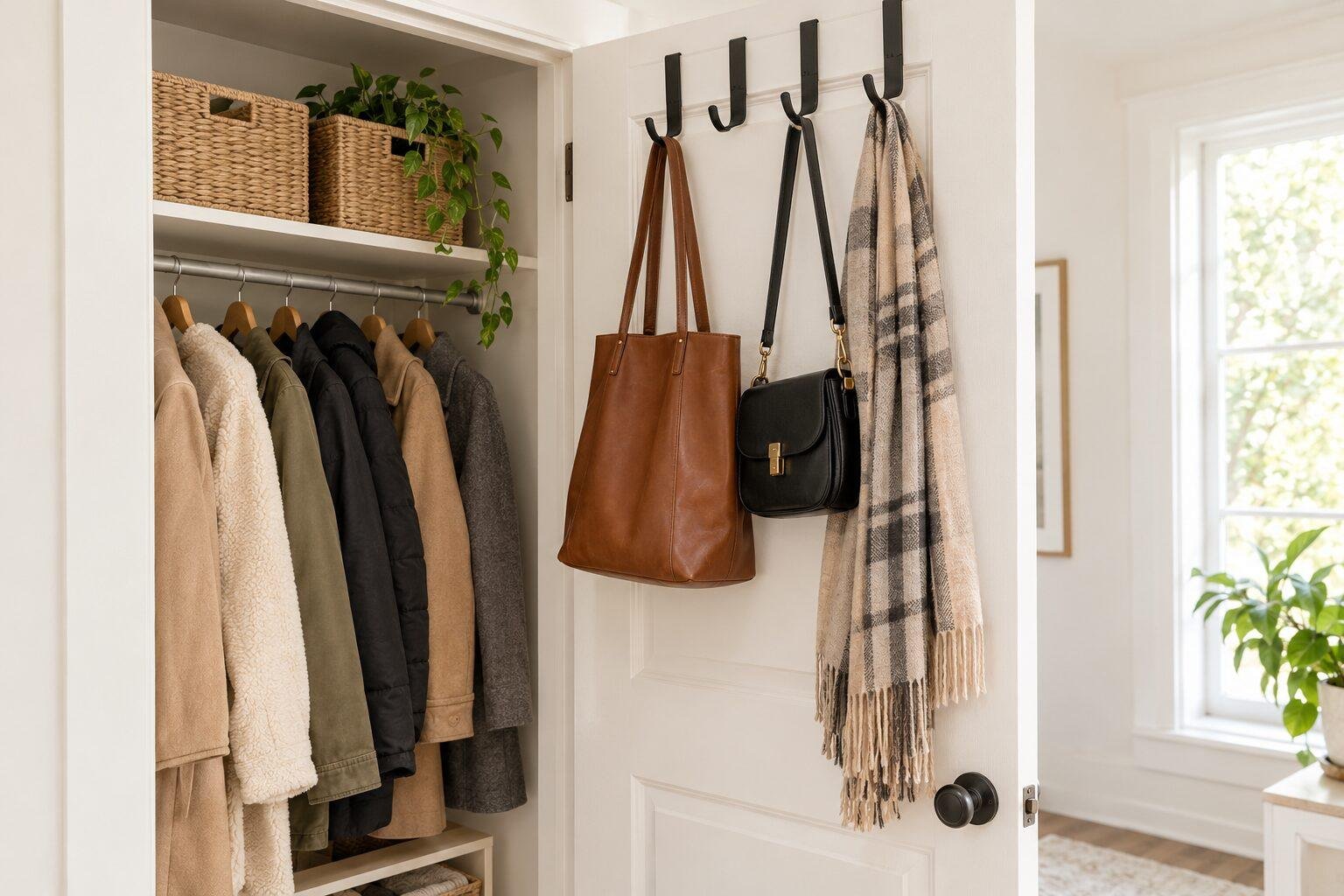
A battery-powered puck light makes a dark closet usable at night; choose a motion or tap light that needs no wiring. If you do add a tall unit, anchor it to the wall — and check your lease before you drill anything. A mirror by the closet door makes a tight entry feel larger, as our wall mirror entryway ideas show.
Keeping It Working: A Twice-a-Year Reset
That twice-a-year reset is the part of entrance way closet ideas that actually lasts. An entry closet stays organized for about as long as the season stays the same, and then it quietly fills up again. The fix is a reset when the weather turns: take everything out, move the out-of-season coats to the bedroom closet, and put the in-season ones back in front. It takes twenty minutes.

The coats that leave the entry closet still need a home, and that is a bedroom-closet question — our small closet organization ideas cover how to make room for them there. Between resets, the one habit that matters is the daily one: shoes back on the rack, coats back on their hooks, wet things left to dry.
Frequently Asked Questions
How many coats should stay in the entry closet?
The ones your household wears this season, plus two or three empty hangers for guests. If the rod is full, something not in season needs to move to a bedroom closet.
What do I do with wet coats and shoes?
Leave wet shoes on a boot tray with air around them, and hang wet coats on a hook with space to dry — not crammed between dry coats. Leave the closet door open for an hour after a wet walk home.
How do I keep guests’ things from ending up in a pile?
Leave a few hangers empty and a clear spot for shoes before they arrive. If the closet is full, hooks on the wall outside it work just as well.
What are the best entrance way closet ideas for a tiny closet?
Hooks at different heights, a boot tray, and a rule that only this week’s shoes and this season’s coats live there. Everything else goes to a bedroom closet.
A Closet That Works on a Rainy Tuesday
Good entrance way closet ideas are not about the most impressive setup; they are about a closet that works on a wet evening when everyone comes home at once. Coats in front with room to spare, shoes on something that can get wet, space left for guests, and one fixed spot for keys and bags — get those four right and the closet mostly looks after itself.