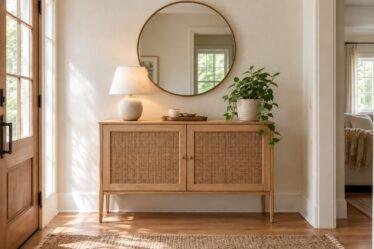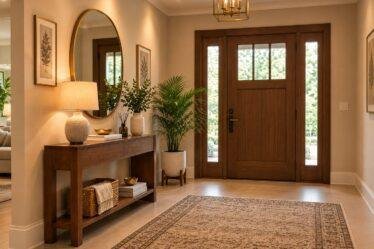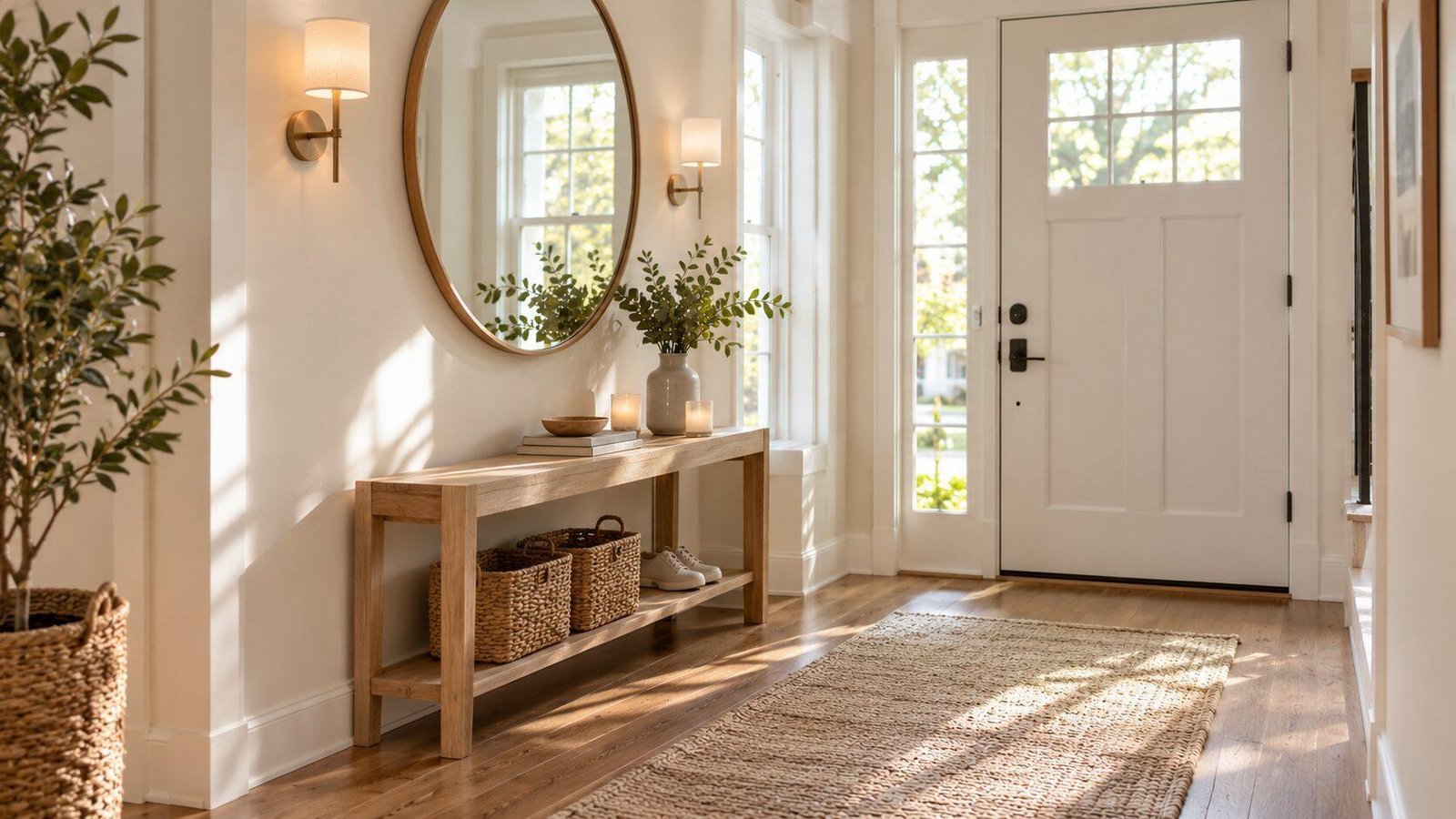
A modern entryway bench is the first piece of furniture you use every day and the first one you trip over when it is wrong. Shoes come off here, bags land here — and if the bench is too deep or too wide, the walk from the front door becomes an obstacle course.
This guide is about the choosing, not a catalogue of looks. The modern entryway bench ideas here start with a tape measure, then work through storage, materials, and style — in that order — so the bench you buy fits the entry you actually have. Here is what to measure first, when a storage bench earns its keep, which materials survive wet shoes, and what to skip.
Table of Contents
Start With the Measurements, Not the Style
Measure the wall first, then open the front door all the way — a bench in the door’s swing is a bench you cannot reach. The walkway to the next room wants about three feet clear with the door open, because a swinging door eats a foot of it.
Depth matters most. In a narrow entry, 12 to 16 inches deep is common and leaves the walkway usable. Seat height is the other number: about 17 to 19 inches is comfortable for putting shoes on. Check what sits above it, too — hooks or a mirror need wall space, and a radiator can rule out a tall bench.
Before you buy, do the tape test. Mark the outline with painter’s tape and live with it a few days. If you keep walking around it, it fits; if you keep tripping over it, it does not — and finding that out with tape costs nothing. Modern entryway bench ideas that skip this step are guesses, and a bench is too big to guess on.
Storage Bench or Open Bench?
Once the measurements work, the question is what lives at the door every day. A storage bench and an open bench solve different problems, and the modern entryway bench ideas that get this right start from the household.
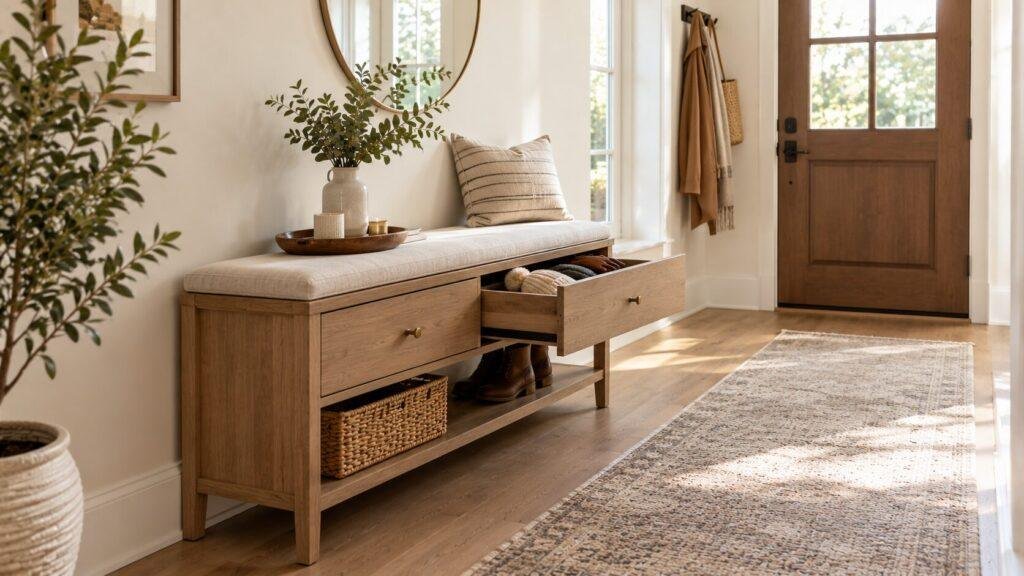
Drawers hide gloves, hats, leashes, and spare keys, and the surface stays calm, which suits a modern look. The catch is clearance: drawers need room to open fully without hitting the wall or the door, so measure the pull-out, not just the bench. Cubbies are the opposite — each person gets a spot, and everything is fast to grab. The trade-off is that cubbies are always on show: tidy, they look graphic and intentional; untidy, they display the mess.
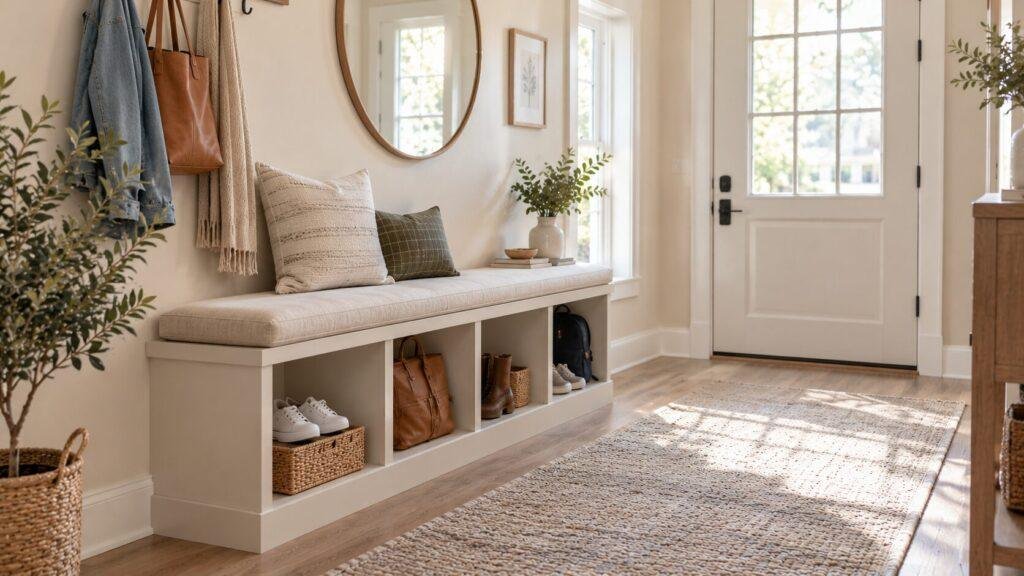
A lift-up lid holds the most but gets heavy — put seasonal items in there, not daily shoes. An open bench with a shelf underneath is the lightest option: baskets slide under the seat and swap out with the season, but only if someone keeps them in order, or the open shelf is just a visible pile.
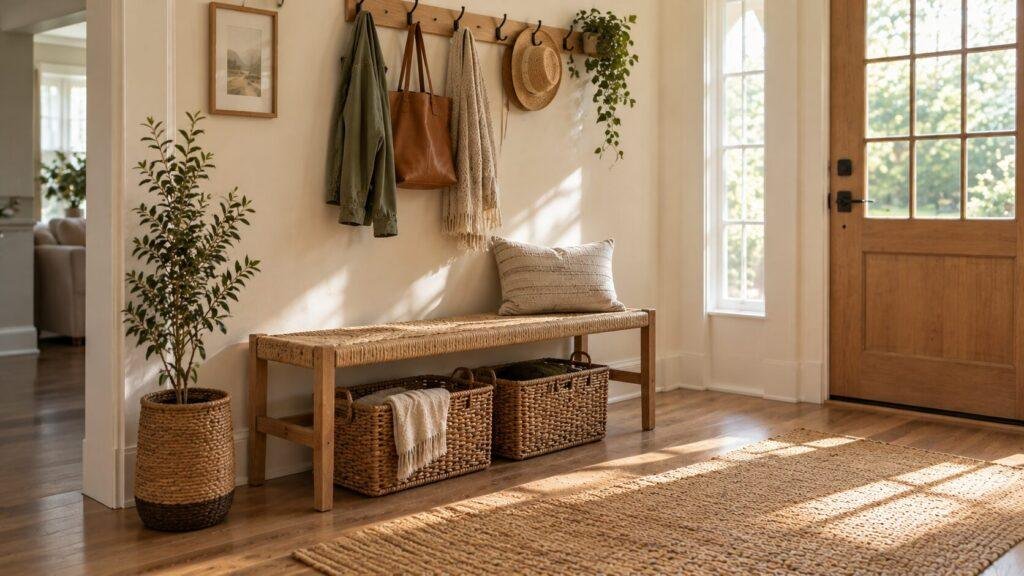
Modern entryway bench ideas for families point to cubbies or baskets at child height, because a system children can reach is one they might use. If guests come often, drawers hide the clutter they should not see. In a small entry, an open bench is usually the better call: storage lives elsewhere, and the bench keeps one job — a place to sit.
Materials That Survive the Front Door
The front door is the hardest place in the house for furniture — wet shoes, muddy boots, bags dropped hard. The material has to survive that before it has to look good. Modern entryway bench ideas that ignore this look tired within a year.
Wood is the easy default in most modern entryway bench ideas: it wipes clean and ages well, and a light wood hides dust and scratches better than a dark one. A solid wood top takes the wear; a painted finish chips where shoes knock against it. Metal is strong and just as easy to wipe, but cold to sit on in winter, and a black finish shows fingerprints and dust. A wood top with metal legs is the common modern pairing.
Upholstery is the comfort choice, and the risk is in the name: fabric next to wet shoes stains. Pick a performance or easy-clean fabric, avoid pale shades by a muddy door, and choose a cushion you can remove and wash. Woven or rattan seats bring texture and warmth without taking much visual space, but they are not the place for dripping boots — keep wet shoes on a tray underneath. The honest test is a wet evening in February: if it wipes clean and dries fast, it will last.
Style: Match the Room, Not the Catalogue
Style comes after size and material, because a beautiful bench that blocks the door is still a mistake. The modern entryway bench ideas that work best start from what the room already looks like, not from a catalogue page.
Slim legs or a solid base is the first style choice in most modern entryway bench ideas. Open legs show the floor beneath, which makes a small entry feel bigger; a solid base reads heavier, which suits a larger room. A black bench adds contrast against light walls — pair it with a wood top and a round mirror about as wide as the bench; our wall mirror entryway ideas cover sizes and shapes.
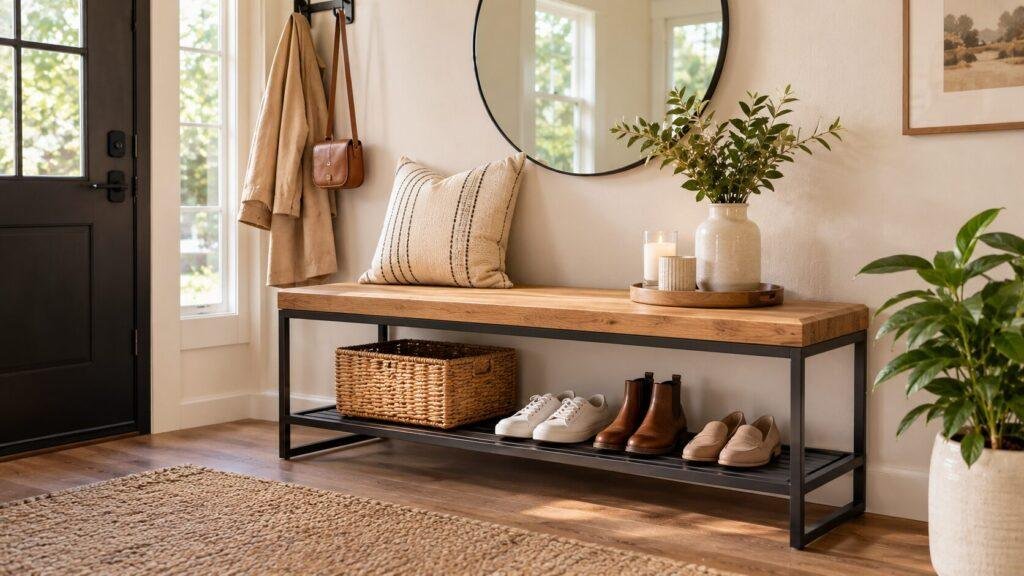
A floating bench keeps the floor clear, which makes cleaning easier. It must go into studs or heavy-duty anchors, and the weight rating matters — check it before anyone sits on it. If you cannot drill, choose freestanding; modern entryway bench ideas for renters should skip the floating bench entirely.
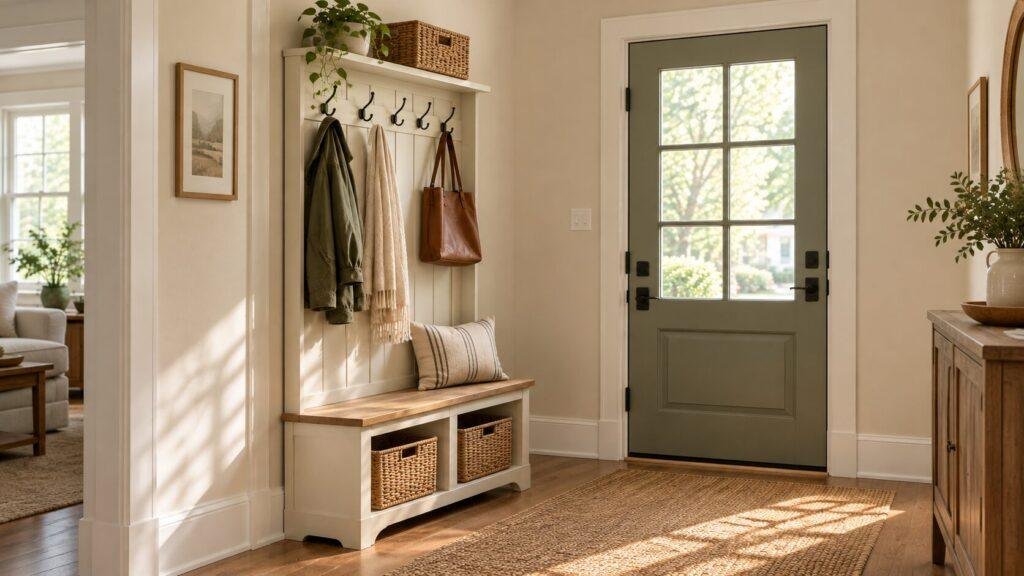
A hall-tree bench — bench with a back panel and hooks above — combines seating, coats, and shoes in one footprint, the right call when there is no closet near the door. But it is the tallest option, so anchor it to the wall: the U.S. Consumer Product Safety Commission’s Anchor It! campaign covers why tall furniture needs anchoring.
Small Entries vs Large Entries
The same bench can be right in one house and wrong in the next. Modern entryway bench ideas for a small entry are about restraint; for a large one, about sharing the wall.
In a small entry, the bench has one job: a place to sit and put shoes on. Keep it narrow, with open legs and no back panel, and keep the seat mostly clear. In a hallway, doubly so.
A large or defined foyer is a different room. The bench can be wider and share the wall with a sideboard — bench for sitting, sideboard for the things that need a drawer; our entry sideboard ideas cover the shapes that work in shallow spaces. Our entrance foyer ideas show how to split the room into zones with one job each. When a closet sits nearby, the bench does less — coats and off-season shoes live in the closet, and our entrance way closet ideas show how much a small closet can hold.
What to Skip
Skip a bench deeper than the walkway allows — it will block the path every day, and no styling fixes a bench you have to sidestep. Skip buying a matching set in one go: buy the bench, live with it a few weeks, then decide what else the wall needs.
Skip light fabric by a muddy door, a tall unit left unanchored, and a bench in front of a radiator or a door. Skip the bigger bench when the problem is too much stuff — if the bench is full, the answer is usually the bedroom closet, not a wider bench; our small closet organization ideas cover the overflow. And skip buying before measuring. Modern entryway bench ideas fail most often here: the bench was bought for the photo, not for the entry.
Frequently Asked Questions
How big should an entryway bench be?
Measure your wall and leave room for the door to open. In a narrow entry, 12 to 16 inches deep is common, seat height around 17 to 19 inches, walkway about three feet clear. These are the numbers most modern entryway bench ideas start from, but your own measurements matter more.
Is a storage bench or an open bench better?
It depends on what lives at the door. Drawers hide small things but need room to open; cubbies are fast but always on show; a lift-up lid holds the most but is heavy to open daily. In a small entry, most modern entryway bench ideas point to an open bench with baskets.
Can I put a bench in a small entryway?
Yes — a narrow bench with open legs or a wall-mounted floating bench, the walkway kept clear, and one job only: a place to sit and put shoes on.
What goes above an entryway bench?
A mirror, a row of hooks, or one piece of art. A mirror about as wide as the bench brightens the entry and gives you a spot to check your look before you leave.
A Bench That Works on a Wet Evening
The best modern entryway bench is not the prettiest one in the shop. It is the one that still works on a wet evening: coats on hooks, shoes on a tray, keys in one spot, a clear walkway. Measure first, choose storage second, let style follow — and the bench will do its job for years.